What To See & Do In Tokyo
Asia · Japan
Tokyo Travel Guide:
Neighbourhoods, Food & Getting Around
Tokyo is not one city — it is dozens of villages fused into a megalopolis, each with its own personality, its own food, its own crowd. This guide shows you how to navigate it.
Thirty-seven million people live in the Greater Tokyo Area, and first-time visitors almost universally describe feeling simultaneously overwhelmed and entirely safe — a combination Tokyo alone seems to achieve. The subway is the most complex in the world, and also among the cleanest and most punctual. The food is extraordinary at every price point. The city operates at a pace and a precision that takes a few days to lock into, and then becomes deeply comfortable.
When to Go to Tokyo
| Season | Months | Conditions | Verdict |
|---|---|---|---|
| Cherry Blossom | Late Mar–Early Apr | Spectacular bloom lasts ~2 weeks. Book accommodation months ahead. | Best |
| Spring | Apr–May | Mild, pleasant. Golden Week (late Apr–early May) is peak domestic travel. | Good |
| Summer | Jun–Aug | Hot, humid, typhoon risk from August. Vibrant matsuri festival season. | Avoid (heat) |
| Autumn | Sep–Nov | Clear skies, stunning foliage from late October. Excellent conditions. | Best |
| Winter | Dec–Feb | Cold but rarely snow in central Tokyo. New Year is busy; January–February very quiet. | Good |
Tokyo's Neighbourhoods

Neighbourhood 01
Asakusa
Old Tokyo · temples, crafts & traditional cultureAsakusa is the city's most visible connection to old Edo — the city that Tokyo replaced. The Senso-ji temple complex, founded in the 7th century, is Tokyo's oldest and most visited shrine, approached through the Nakamise shopping street where vendors have sold snacks and crafts for centuries. Early mornings here, before the tour groups arrive, are among the best hours Tokyo offers: incense smoke, monks, the rattle of fortune sticks.
Beyond the temple, Asakusa retains a neighbourhood quality that's harder to find in shinier parts of the city. Rickshaws operate in the lanes behind the temple; a short walk takes you to the Sumida River embankment, excellent for cherry blossom season. The Tokyo Skytree — the world's tallest tower — is visible from almost everywhere in the district.

Neighbourhood 02
Shinjuku
Tokyo's busiest hub · shopping, entertainment & izakayasShinjuku Station processes over three million passengers daily — the busiest station on earth — and the neighbourhood that surrounds it operates at the same intensity. The east side holds Kabukicho, Tokyo's entertainment and nightlife district, plus the extraordinary Golden Gai: a cluster of around 200 tiny bars, each holding between 5 and 12 people, with menus that range from whisky to craft beer to obscure cocktails. Finding your way through Golden Gai's alleyways is one of the city's great small adventures.
The west side of Shinjuku is all corporate towers and government buildings — the Tokyo Metropolitan Government Building offers free observation decks with some of the best city views available. Omoide Yokocho (Memory Lane) — a narrow alley of yakitori smoke and lantern light — runs near the station's west exit.

Neighbourhood 03
Shibuya
The crossing, the energy, the shopping · Tokyo at maximum volumeThe Shibuya Scramble Crossing has become one of the world's most photographed intersections — and the pedestrian crossing truly does engulf every direction simultaneously when the lights change, with up to 3,000 people crossing at once in peak hours. The Shibuya Sky observation deck, or a seat at the Starbucks overlooking the crossing, gives you the aerial view that photographs best.
Shibuya's shopping stretches from mass-market to high fashion: Shibuya 109 remains the centre of youth fashion; the newer Scramble Square mall covers everything else. Daikanyama, a ten-minute walk or one subway stop away, is the quieter, design-led counterpoint — boutiques, coffee shops, and the extraordinary Tsutaya bookstore complex worth a detour in its own right.

Neighbourhood 04
Harajuku & Omotesandō
Fashion, youth culture & high-end design · two streets, two worldsTakeshita Street in Harajuku is the birthplace of Tokyo's youth fashion subcultures — cosplay, Lolita, streetwear hybrids that defy easy categorisation. On weekends it's a parade of creativity and candy-coloured chaos. Two minutes away, Omotesandō is Japan's answer to the Champs-Élysées: a broad, zelkova-lined boulevard where every major luxury brand has commissioned a building that functions as architecture-as-statement (the Prada building, the Comme des Garçons flagship, and Herzog & de Meuron's Louis Vuitton are all worth pausing for). Omotesandō Hills mall and the side streets of Minami-Aoyama hold the highest concentration of independent designers in the city.

Neighbourhood 05
Akihabara
Electronics, anime & manga · Japan's otaku capitalAkihabara has been Tokyo's electronics district since the postwar era, when surplus radio components were sold in the streets. It has since become the global centre of anime, manga, and gaming culture — multi-storey buildings devoted entirely to figures, vintage games, maid cafes, and component electronics. Even for travellers with no particular interest in gaming or anime, Akihabara is a genuinely fascinating window into a massive slice of contemporary Japanese culture. The backstreets hold specialist shops that have been selling the same category of electronic component for 40 years alongside brand new gaming peripherals. Yodobashi Camera's flagship store, a short walk from the station, is one of the largest electronics retailers on earth.

Neighbourhood 06
Ueno & Yanaka
Museums, park life & Tokyo's best-preserved old neighbourhoodUeno Park is Tokyo's most celebrated public space — wide paths under cherry blossom canopy in spring, a cluster of world-class museums year-round, and the Ueno Zoo, the country's oldest. The Tokyo National Museum holds the finest collection of Japanese art anywhere, including National Treasures that rarely travel. The area around Ueno Station holds the Ameyoko market, a covered street market that's been operating since the American occupation era.
A twenty-minute walk north brings you to Yanaka — arguably the most intact pre-war neighbourhood remaining in central Tokyo. The great fire-bombing of 1945 largely spared it, leaving wooden machiya townhouses, a temple-dense cemetery that residents treat as a park, and a high street (Yanaka Ginza) that sells rice crackers and handmade goods at prices aimed at locals rather than visitors. It is the most atmospheric walk in the city.
7-Day Tokyo Itinerary
Day 1
Arrival & Shinjuku
Arrive at Narita or Haneda. Load your Suica card at the airport. Check in and orient yourself. Evening in Shinjuku: Golden Gai for drinks, Omoide Yokocho for yakitori.
Day 2
Asakusa & Ueno
Early start at Senso-ji before the crowds. Walk the Nakamise. Afternoon at the Tokyo National Museum in Ueno, then the Ameyoko market. Return via the Sumida River embankment.
Day 3
Shibuya & Harajuku
Morning coffee above the Shibuya Crossing. Explore Daikanyama. Afternoon in Harajuku (Takeshita St) and Omotesandō. Walk the Meiji Shrine forest in between.
Day 4
Akihabara & Yanaka
Morning in Akihabara — electronics, gaming, the full Yodobashi experience. Afternoon slow walk through Yanaka — temple cemetery, Yanaka Ginza for snacks and craft goods.
Day 5
Day Trip: Nikko or Kamakura
Both are under 90 minutes from central Tokyo. Nikko offers Edo-period shrine complexes; Kamakura has the Great Buddha and Zen temples. Return in time for a depachika (department store basement food hall) dinner.
Day 6
Tsukiji Outer Market & Odaiba
Breakfast at the Tsukiji Outer Market — the freshest sushi in Tokyo, available from 6 am. Afternoon in Odaiba: teamLab Borderless or Planets digital art museum, plus Tokyo bay views. Evening ramen in whichever neighbourhood you haven't explored yet.
Day 7
Final Morning & Departure
Slow morning — your final convenience store breakfast, a last coffee. Morning market or a quiet temple. Transfer to airport. The Narita Express (N'EX) runs directly from Shinjuku, Shibuya and Tokyo Station.
Food in Tokyo

Food 01
Ramen
Tonkotsu, shoyu, miso, shio — four styles, infinite variationsTokyo's ramen scene is stratified into obsessive detail. The city's own style (Tokyo ramen) uses a soy-based broth with curly noodles; Shinjuku's Fuunji serves the tsukemen (dipping noodle) variation that queues form for daily. Ichiran in multiple locations offers solo dining booths and the experience of eating in total, focused silence. The Ramen Street in Tokyo Station's basement level gathers eight regional styles under one roof — reasonable quality, very convenient.
Food 02
Sushi
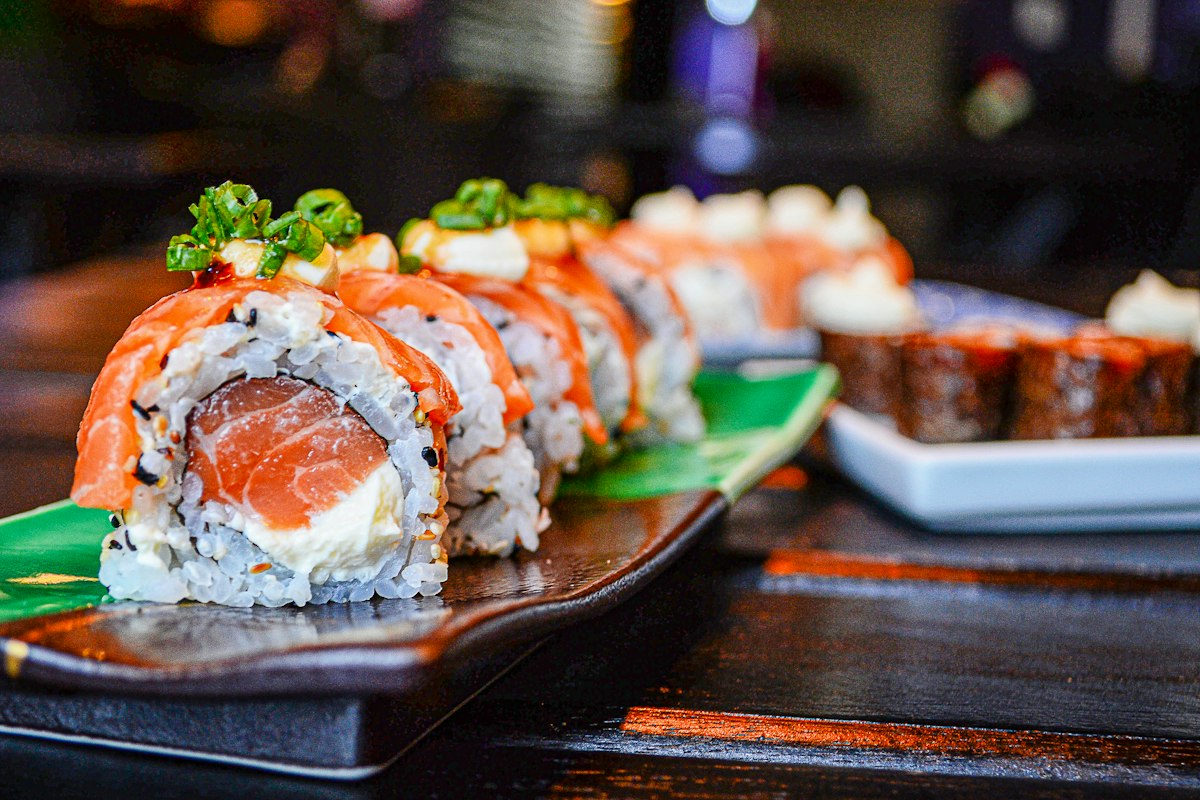
From conveyor belt to Michelin-starred omakaseTokyo has more Michelin-starred restaurants than any city in the world, and sushi accounts for a significant share. You do not need to spend ¥30,000 at an omakase counter to eat extraordinary sushi — the standing sushi bars around Tsukiji Outer Market deliver some of the freshest fish in the city for ¥1,000 a plate. Sushiro and Kurazushi are the conveyor-belt chains that prove the format can deliver genuinely good fish at ¥165 per plate. For a mid-level splurge, the kaiten (rotating) bars in depachika food halls are a reliable middle ground.
Food 03
Yakitori & Izakaya
The backbone of Tokyo evening cultureIzakayas are Japan's answer to the pub — informal, noisy, serving small plates and large quantities of beer, highballs, and sake. The experience of sitting at a shared table in a smoky izakaya under a train bridge in Yurakucho, ordering successive plates of yakitori (charcoal-grilled chicken skewers in varieties from thigh to cartilage), is one of the most essential Tokyo evenings available at any budget. Omoide Yokocho in Shinjuku is the most atmospheric cluster; the Yurakucho yakitori alley under the train lines is less visited and arguably more authentic.
Getting Around Tokyo
Suica/Pasmo card: Load one at any station from any major airport. Touch in and out on every subway, JR train, bus, and many convenience stores. It is the single most important thing to do on day one. The card can be topped up at any station machine.
Google Maps: Works comprehensively for Tokyo public transport — enter your destination and it shows the correct subway line, platform number, and journey time. Use it without hesitation.
JR Pass: Worth buying only if you plan to travel to other Japanese cities (Kyoto, Osaka, Hiroshima, Hakone). For Tokyo-only travel, the Suica card covers everything you need at much lower cost.
Taxis: Expensive and usually unnecessary given the subway. Useful after midnight when train frequency drops. Uber operates in Tokyo and is often cleaner than street hailing.
Convenience Stores: 7-Eleven, FamilyMart and Lawson in Japan are not like convenience stores anywhere else. The onigiri, sandwiches, hot foods, and pastries are genuinely excellent. Breakfast from a konbini is one of the great underrated Tokyo experiences and costs under ¥600.
Discovery Escapes: Japan Discovery
- Tokyo, Kyoto, Hiroshima and Osaka with local guides at each city
- Shinkansen bullet train passes included for intercity travel
- Central hotels in each city — 4-star, walking distance from key areas
- Tokyo neighbourhood walks with a local guide on day two
- Tea ceremony and sake tasting experiences included
- All-day Suica cards pre-loaded and ready at check-in
Ready to Discover Tokyo?
Let Discovery Escapes handle the logistics — transport, hotels and local guides in every neighbourhood — while you focus on the ramen.
Explore Japan Tours