Where to Travel in Spain in Summer
Spain doesn't do things quietly. It does late lunches that turn into early dinners, flamenco in a courtyard that wasn't on any itinerary, beaches that are still alive at midnight, and cities so layered with history and food and noise and beauty that you come back slightly overwhelmed and immediately start planning your return. It is one of the great summer countries — and one of the most misunderstood, because most people see only a fraction of what it can be.
This guide covers seven of the best destinations in Spain in summer 2026: Barcelona, Madrid, Ibiza, Mallorca, San Sebastián, Seville, and Marbella. They each offer something the others don't. They each deserve more time than most people give them. And together they form an argument for Spain as one of the most rewarding, most varied summer travel destinations in all of Europe.
Here's how to experience them properly.
01Barcelona
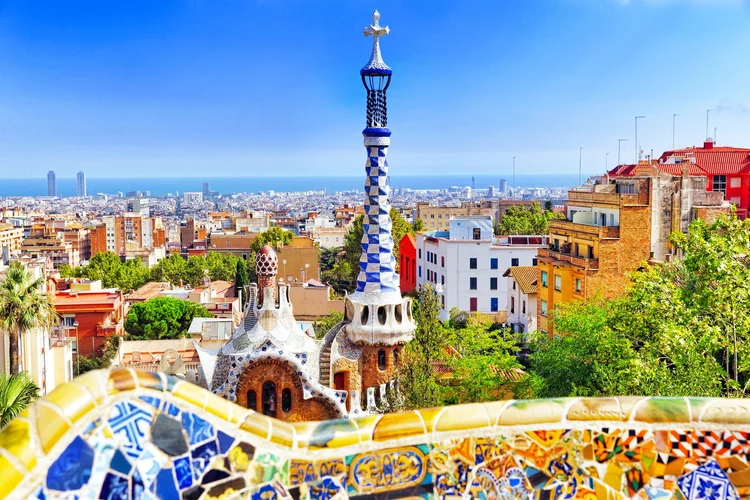 Catalonia · Best June & September
No city in Europe is more defined by a single architect than Barcelona is by Antoni Gaudí — and 2026 marks the centenary of his death, which the city is commemorating with a year-long programme of exhibitions, events, and new access to his work. The Sagrada Família, still technically under construction after 144 years, is expected to complete its central Tower of Jesus Christ by the end of 2026, making this year genuinely historic for the building and the city. Visit at opening time before the crowds arrive and you'll understand why it's considered the most extraordinary religious building of the 20th century.
Beyond Gaudí, Barcelona is a city that earns its reputation from every direction. The Gothic Quarter is a medieval maze of Roman foundations and medieval alleyways, still functioning as a neighbourhood rather than a museum. The market at La Boqueria is chaotic and overrun with tourists at midday but extraordinary at 8am, when the stalls are fresh. The beach at Barceloneta is lively to the point of chaos in August — head instead to Bogatell or Nova Icaria, twenty minutes along the coast, for the same sea without the circus. The neighbourhood of El Born has some of the best small restaurants in the city; Gràcia, further up the hill, is where locals actually eat and drink in summer.
What Makes It Special in Summer
The Gràcia neighbourhood festival in mid-August, when the streets are decorated by residents in competition with each other, is one of the great free cultural events in Spain. The rooftop jazz concerts at Casa Milà (La Pedrera) on summer evenings combine one of Gaudí's finest buildings with live music and views over the city. And the evening passeig — the ritual of walking slowly, stopping for vermouth, eating late — is at its most alive from June through September.
Barcelona Quick Facts
- Best Time June and September — warm, but before the peak August crowds hit
- Don't Miss Sagrada Família at opening time, Gothic Quarter at dusk, Casa Batlló illuminated at night
- Local Tip Book Sagrada Família 2–3 months ahead; same-day tickets are essentially gone in summer
- Beaches Skip Barceloneta for Bogatell or Nova Icaria — same sea, much less chaos
- Getting There Direct flights from most European cities; high-speed train from Madrid in 2.5 hours
Madrid
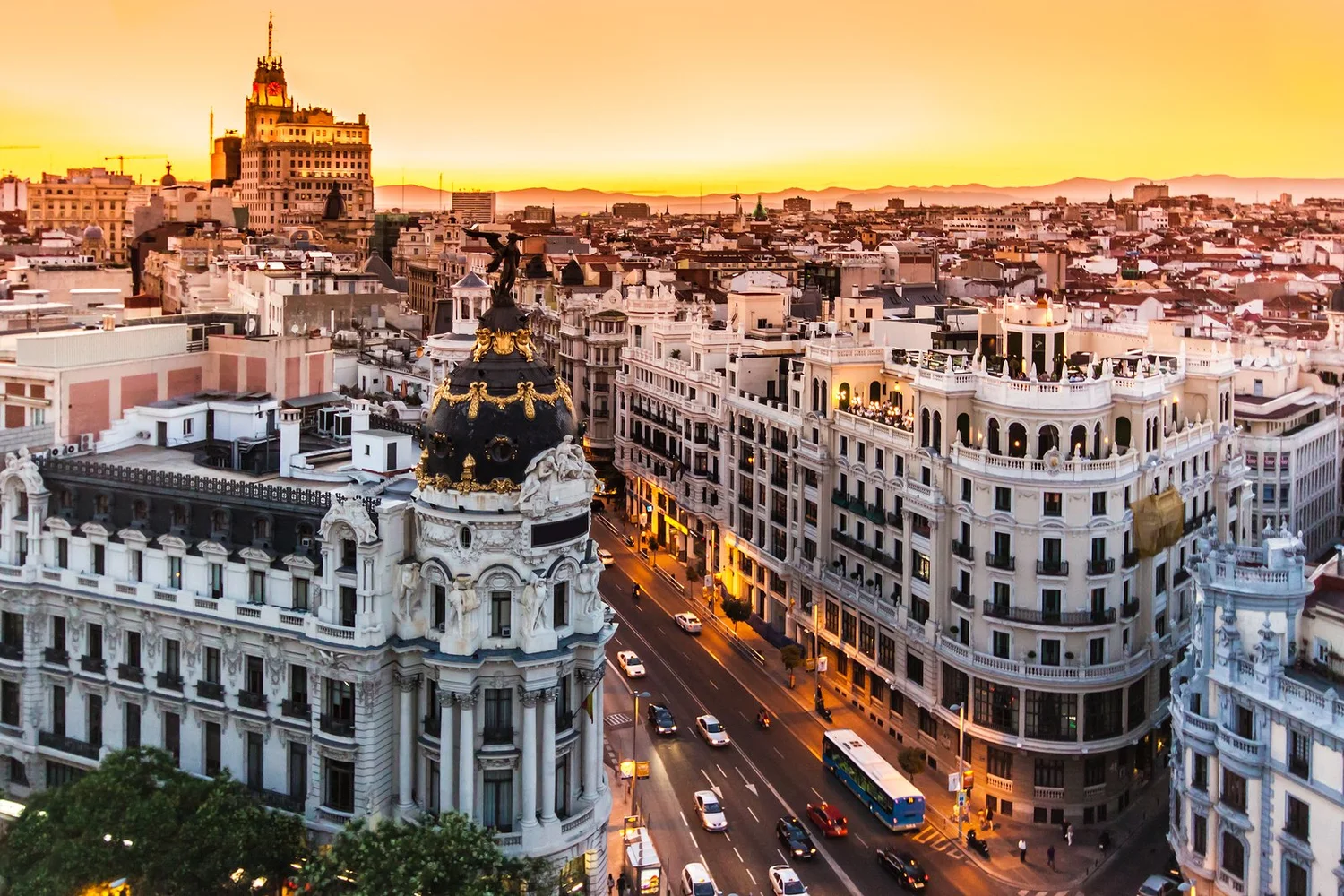 Castile · Best June & September
Madrid is hotter than anywhere else in Spain in summer — it sits at 650 metres on a high plateau with nothing to moderate the heat, and July and August regularly push above 38°C. That's not a reason to avoid it; it's a reason to approach it on Madrid's own terms. The city invented the concept of the siesta precisely because sensible people don't walk around in the midday sun. Arrive early at the Prado — one of the finest art museums in the world, with Velázquez and Goya in rooms that are never as crowded as the Louvre — and you'll have the masterpieces largely to yourself. Spend the afternoon in a bar or a shaded terrace in La Latina. Emerge again at 8pm, when the city reawakens and the evening air becomes one of the finest things in European travel.
The food scene in Madrid is extraordinary and often underrated compared to Barcelona and San Sebastián. The Mercado de San Miguel is a gourmet tapas market a minute's walk from Plaza Mayor. The neighbourhood of Lavapiés has evolved into one of the most interesting and international dining areas in Spain. And the ritual of the Sunday El Rastro flea market in La Latina, followed by a long lunch of patatas bravas and house wine at a bar on the Cava Baja, is one of the most enjoyable Sunday mornings in Europe.
What's New in 2026
Madrid hosts its inaugural Spanish Formula 1 Grand Prix in September 2026 — the first time the race has been held in the Spanish capital, on a new circuit incorporating street sections through the city. If you're flexible on dates, the race weekend of September 11–13 will be extraordinary. For art lovers, the Thyssen-Bornemisza Museum — which sits alongside the Prado and the Reina Sofía to form one of the great museum triangles in Europe — continues to stage some of the most ambitious loan exhibitions in Spain.
"Madrid at 9pm in July, when the heat breaks and the terraces fill and the city moves at a pace that has no equivalent anywhere else in Europe — that's what the city is really for."03
Seville
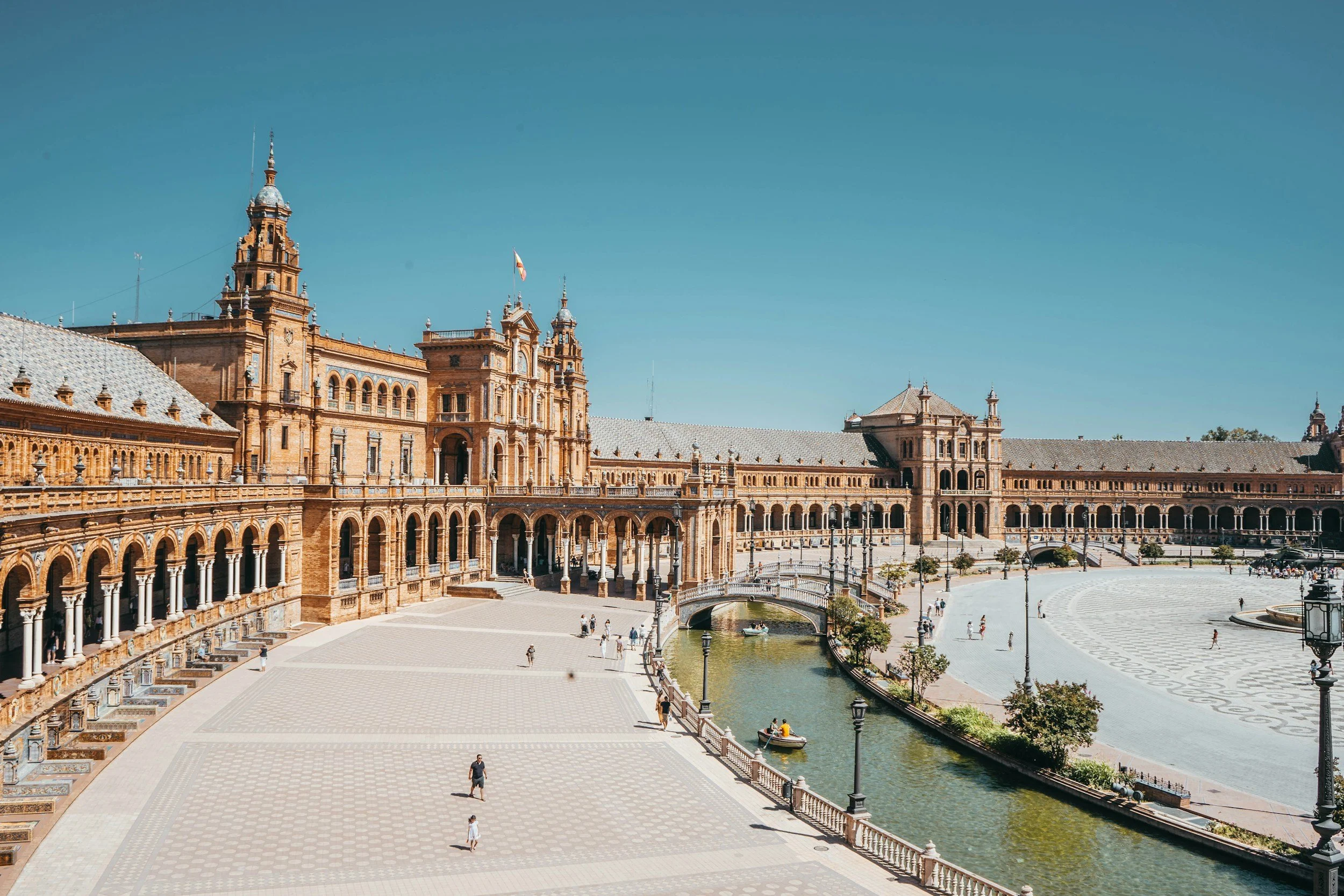 Andalusia · Best June & September
Condé Nast Traveler named Seville one of its standout European destinations for 2026 — and for anyone who's spent an evening in the Barrio Santa Cruz as the jasmine blooms and the tapas bars fill with locals, it makes complete sense. Seville is the most purely Andalusian city in Spain: flamenco born here, the finest Moorish architecture outside of Alhambra, a food scene that has evolved from tapas tradition into something genuinely world-class, and an energy that is simultaneously ancient and entirely alive.
The Real Alcázar is the centrepiece: a palace of extraordinary layered beauty — Moorish arches, Renaissance courtyards, and gardens of orange trees and peacocks — that was still a royal residence as recently as the 1990s and was used as Dorne in Game of Thrones. The Cathedral next door, the world's largest Gothic church, houses the tomb of Christopher Columbus. The Giralda tower, originally a 12th-century minaret, can be climbed on Mondays between 4:30–6pm for free. The neighbourhood of Triana, across the Guadalquivir river, is where the city's flamenco tradition was born and where the best ceramics, the most authentic tablao performances, and the most local restaurant experiences are still found.
The Golden Hour Rule
Seville in July and August is genuinely extreme — temperatures regularly exceed 42°C, and the city effectively shuts down between noon and 6pm. This is not a flaw to work around; it's a rhythm to embrace. Spend mornings at the Alcázar, afternoons in shade with a cold manzanilla, and evenings walking streets that cool rapidly after sunset and stay alive until 2am. Seville in the golden hour of a June evening, when the stone glows amber and the terraces are full and a guitarist is playing somewhere nearby, is one of the finest experiences in European travel.
Seville Quick Facts
- Best Time June and September — beautiful weather without the extreme July–August heat
- Avoid Midday July and August outdoors — 40°C+ is real and unforgiving
- Don't Miss Real Alcázar at opening, Barrio Santa Cruz at dusk, flamenco in Triana, Mercado de Triana for breakfast
- Day Trip Córdoba (1 hour by train) for the Mezquita — one of the most beautiful buildings in the world
- Tours Tailor-made Spain itineraries from Discovery Escapes
Ibiza
 Balearic Islands · Best Late May, June & September
Ibiza has a reputation problem: everyone knows it as the electronic music capital of the world, which it unquestionably is, and fewer people know it as one of the most beautiful, most varied, and most surprisingly sophisticated Mediterranean islands in existence. Both things are true and they coexist without apology. The north of the island — pine-covered hills, ancient clifftop villages, farmers' markets, and wild coves that require a fifteen-minute walk to reach — feels nothing like the south, where the superclubs and mega-yachts operate. Both versions are worth experiencing; very few people experience both.
The UNESCO-listed Dalt Vila, the old walled town above Ibiza City, is one of the most beautifully preserved historic centres in the Balearics: medieval walls, whitewashed houses, rooftop views across the harbour to Formentera. The northern village of Sant Joan de Labritja has a Sunday market that draws the island's creative community. Café del Mar in Sant Antoni, legendary for its sunset ritual, remains one of the most atmospheric places in the Mediterranean to watch the sun go down. And Es Vedrà — the towering rock formation rising from the sea off the southwest coast — is one of those sights that doesn't look real and doesn't photograph well and is entirely worth making the drive to witness.
Beyond the Clubs
The coves of the north — Cala Xarraca, Cala Benirrás, Cala d'en Serra — are pristine and quiet even in August, largely because they require effort to reach and have no infrastructure to absorb mass tourism. The Wednesday market at Las Dalias in Sant Carles has been running since 1985 and is the best place on the island to understand Ibiza's alternative, creative counterculture. Boutique finca hotels set in olive groves in the interior offer genuine luxury at rates significantly below the marina hotels. Package holiday prices to Ibiza are down slightly in 2026, making this a good year to go.
"Ibiza rewards travelers who resist the itinerary. The best days there always involve going somewhere unplanned and staying far too long."05
Mallorca
 Balearic Islands · Best June & September
Mallorca's evolution from package-holiday island to sophisticated Mediterranean destination is one of the quieter travel stories of the past decade — and it's now far enough along that the two versions of the island coexist in distinct geographical zones. The south and east coasts contain the high-volume resorts. The west coast and the Serra de Tramuntana mountain range, which runs along the entire northwest of the island and is UNESCO World Heritage listed, is something else entirely: dramatic limestone peaks, olive and almond groves, stone-walled terraces dropping to turquoise coves, and some of the most beautiful villages in Spain.
Palma, the capital, deserves more credit than it receives. The Gothic cathedral — La Seu — rising directly above the harbour is one of the finest medieval buildings in the western Mediterranean. The old city behind it is compact and walkable, with excellent restaurants, independent boutiques, and neighbourhood bars that feel genuinely local rather than tourist-facing. The village of Deià, perched on the mountains above the sea halfway along the north coast, has been drawing artists and writers since Robert Graves settled there in the 1930s; the hotel La Residencia, set in two 16th-century manor houses above the village, is among the finest places to stay in Spain.
The West Coast and the Mountains
The drive from Palma to Sóller through the Tramuntana mountains is among the most spectacular roads in the Mediterranean. Port de Sóller has a beautiful natural harbour, a 1912 vintage tram connecting it to the town above, and a pace of life that feels entirely separate from the island's busier resort areas. Cap de Formentor, at the island's northern tip, has one of the finest beaches in the Balearics — Platja de Formentor — with access by shuttle bus in summer to reduce traffic on the mountain road. The coves of the southeast coast — Cala Mondragó, Cala Llombards, Cala Figuera — are small, sheltered, and extraordinary.
Mallorca Quick Facts
- Best Time June and September for the west coast and mountains; July–August if beach-resort life is the goal
- Stay Deià or Sóller for the mountain experience; Palma for city culture; southeast coast for quiet coves
- Don't Miss Serra de Tramuntana drive, Palma Cathedral at sunset, Cap de Formentor, Deià village
- Getting There Palma airport (PMI) — direct flights from most UK and European cities year-round
- Combined Trip Barcelona, Ibiza, and Mallorca make a brilliant island-and-city combination
San Sebastián
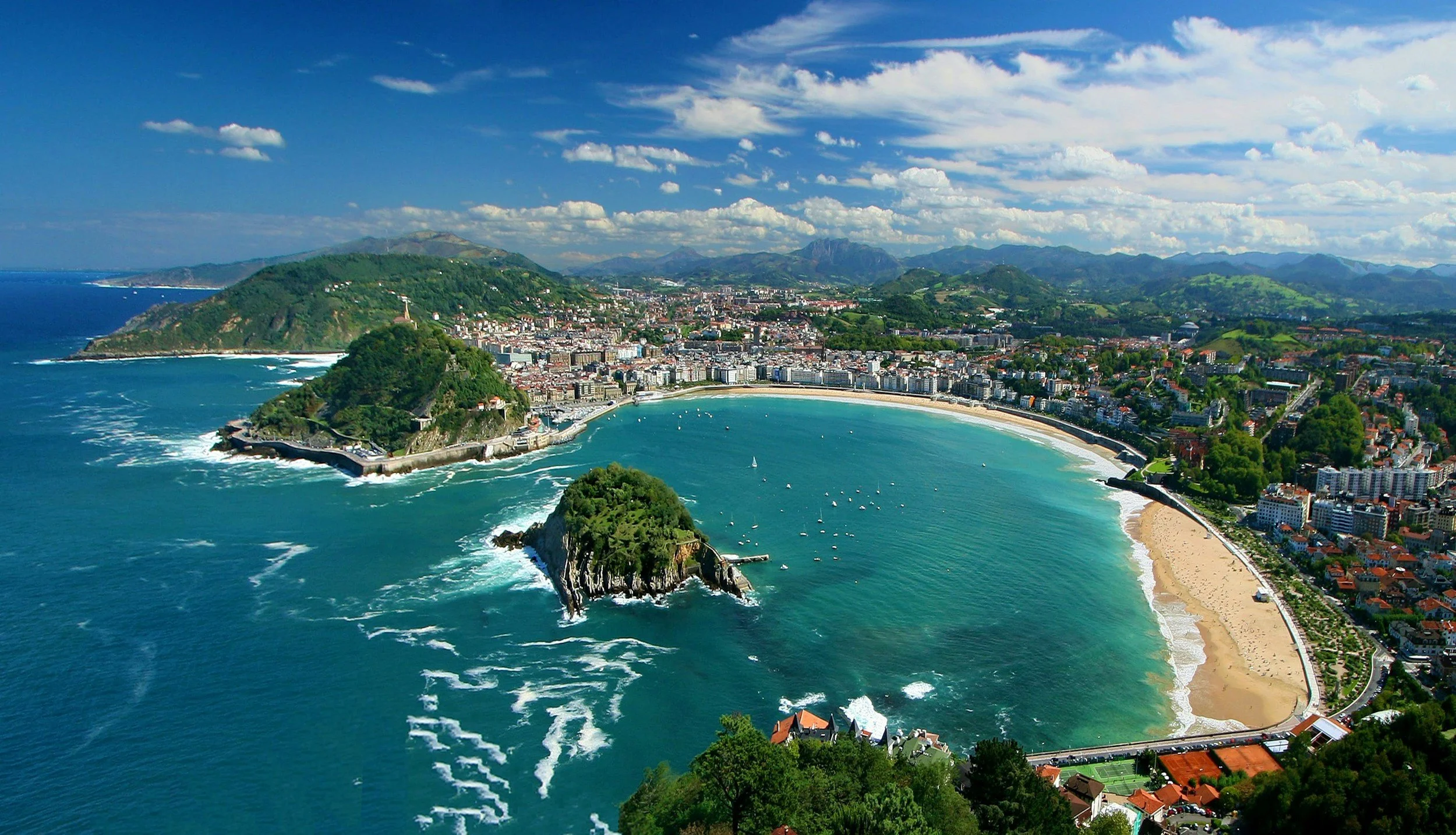 Basque Country · Best June–September
San Sebastián makes a serious claim to being the finest food city in the world for its size — and the claim is hard to argue with. The pintxos bars of the Parte Vieja (Old Town) are a civilisation of their own: counter after counter of extraordinary one-bite creations, built on bread or skewered on a cocktail stick, changed daily, priced at €2–3 each. The ritual is to move from bar to bar, ordering one or two things at each, washing each with a small glass of cold Txakoli white wine, moving on, circling back to the ones that were best. It is the most pleasurable way to eat in Europe.
The city also has La Concha — widely considered the finest urban beach in Europe, a perfect crescent of golden sand sheltered in a horseshoe bay below the old town, with calm water and mountain views. It is the single beach in Spain where the setting, the swimming, and the food within walking distance are all simultaneously world-class. The contrast with Barcelona's more chaotic Barceloneta is instructive: La Concha is beautiful, manageable, and surrounded by one of the greatest concentrations of Michelin-starred restaurants in the world, including Arzak and Mugaritz. You can spend a morning at the beach and a three-hour lunch at one of Europe's finest restaurants without taking a taxi.
The Basque Country Beyond the City
San Sebastián sits at the heart of a region that rewards driving. Getaria, thirty minutes west along the coast, is a tiny fishing village with its own wine (Getariako Txakolina), extraordinary grilled fish restaurants, and the birthplace of the fashion designer Cristóbal Balenciaga — whose museum there is among the finest in Spain. Biarritz, just across the French border, is forty minutes away and adds a belle époque beach resort to a very manageable day trip. The surrounding hills and the Bay of Biscay coastline are green and dramatic, and the weather — cooler and occasionally rainy compared to southern Spain — makes this an ideal summer escape for those who find 40°C Seville genuinely uncomfortable.
"San Sebastián is the city that convinces you to move there every single time you visit. The food, the beach, the compact beauty of it — it adds up to something you don't quite recover from."07
Marbella
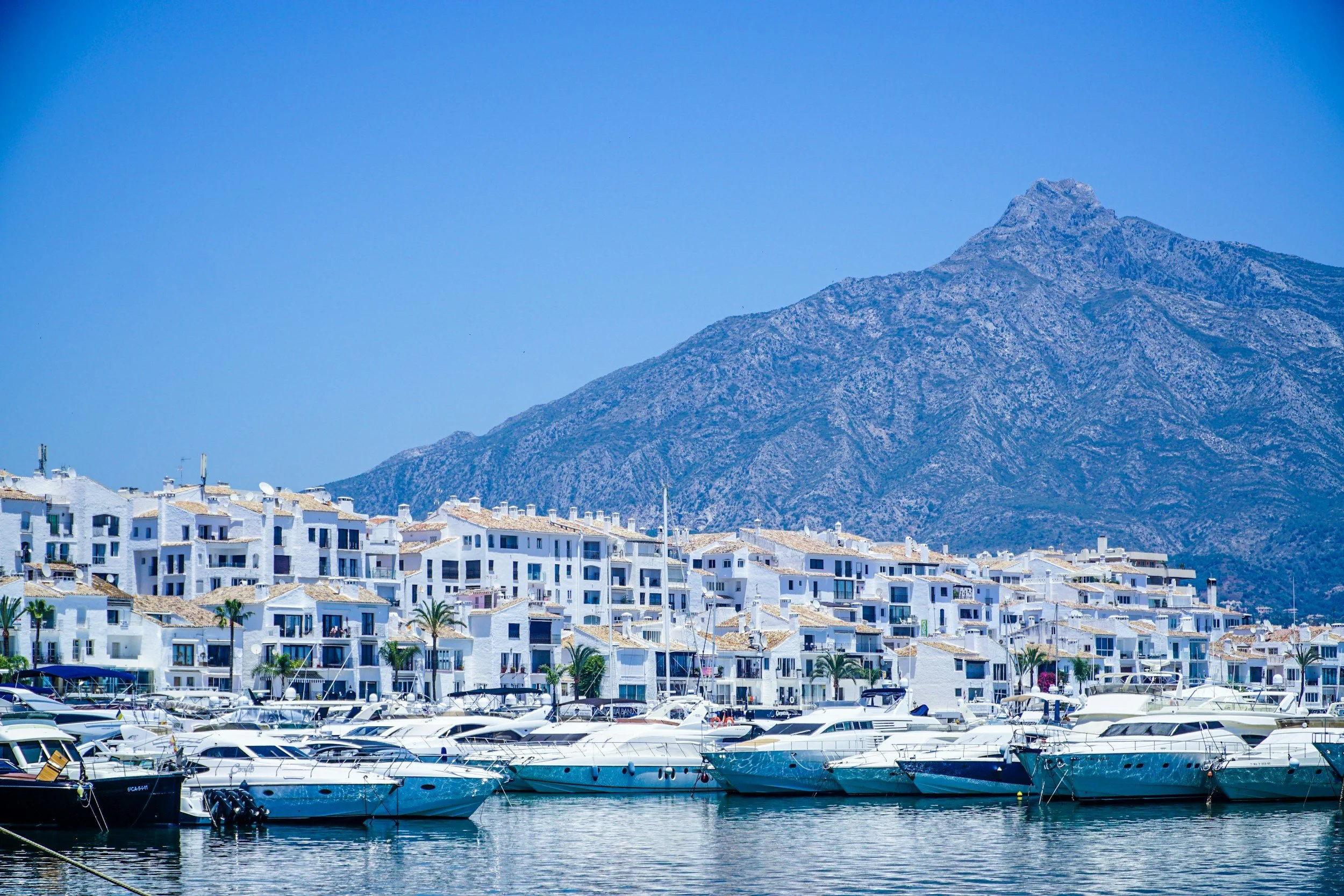 Costa del Sol, Andalusia · Best June–October
Marbella is exactly what it looks like: glamorous, sun-soaked, unapologetic about its appetite for luxury, and genuinely excellent at delivering it. The Costa del Sol has over 320 days of sunshine a year, some of the finest beach clubs in Europe, and a marina scene at Puerto Banús — superyachts, designer boutiques, open-air restaurants — that is the Mediterranean version of a spectacle. It's not trying to be something more culturally layered than that, and it doesn't need to be. It is, on its own terms, extraordinary.
The old town, however, is something most visitors to Puerto Banús never reach. The casco antiguo of Marbella — a tangle of whitewashed alleys, flowerpot-hung facades, and small squares shaded by orange trees — is one of the most beautiful historic centres in Andalusia, and entirely removed in mood from the resort life a kilometre away. The Golden Mile, the stretch of coastline running west from Marbella to Puerto Banús, contains some of Spain's finest luxury hotels: the Marbella Club, opened in 1954 and still the standard-bearer, and the Puente Romano, built around a genuine Roman bridge and spread across subtropical gardens to the sea.
The Coast Beyond Marbella
The Costa del Sol is not just Marbella. Ronda — an hour inland, a white-walled town perched on a dramatic gorge — is one of the most visually striking towns in Spain and an easy day trip. The village of Casares, clinging to a hillside above the coast, is virtually untouched by tourism. Tarifa, at Spain's southernmost point, is the windsurfing and kitesurfing capital of Europe and has a completely different energy from the beach-club world — young, international, and genuinely wild. Gibraltar is 45 minutes by car and adds a strange, surreal British-Mediterranean hybrid to what is already a varied region.
Marbella Quick Facts
- Best Time June and September for warmth with slightly less chaos; July–August for full beach-club season
- Stay Golden Mile for the classic luxury experience; Puerto Banús for marina life; old town for character
- Don't Miss Old Town (casco antiguo), Marbella Club or Puente Romano for a drink even if not staying, Ronda day trip
- Fly Into Málaga (AGP) — 45 minutes from Marbella, well-connected from across Europe
- Spain Tours Custom Spain itineraries from Discovery Escapes
How to Plan the Perfect Spain Summer Trip
Spain is one of the most rewarding countries in Europe to travel slowly and one of the most punishing to rush. The temptation to combine Barcelona, Madrid, Seville, an island, and a beach resort in ten days is understandable and almost always results in a trip that skims the surface of everything and properly experiences nothing. Here's how to actually do it well.
Choose a Theme and Build Around It
Spain's regions are genuinely different from each other — in language, food, architecture, and feel. Catalonia (Barcelona) and Andalusia (Seville) could be different countries. The Basque Country (San Sebastián) has its own culture, its own language, its own cuisine. Choosing one or two regions and going deep within them will produce a better trip than circuit-touring the headline cities. A Balearic Islands itinerary (Barcelona, Ibiza, Mallorca) is different from an Andalusia itinerary (Seville, Ronda, Granada) is different from a northern food trip (San Sebastián, Bilbao, Rioja). Pick the version of Spain that fits what you want.
June and September Are Better Than You Think
July and August are peak season and genuinely wonderful — Spain is more alive in summer than at any other time of year. But June offers the full warmth of Mediterranean summer without the extreme heat of August in the south, prices are lower across the board, and every site, beach, and restaurant is significantly more accessible. September is arguably even better: Ibiza and Mallorca reach their warmest sea temperatures, Seville and Madrid are cooler and more liveable, and the Spanish themselves describe September as the month when the country belongs to them again.
The Heat in the South Is Not a Minor Detail
Seville and Córdoba in August regularly reach 44°C. Madrid is only marginally cooler. This is not comfortable by any standard, and it kills the experience of outdoor sightseeing from about 11am to 7pm. If you're committed to visiting the south in August, structure your days entirely around Spanish time: early morning activities, long lunch in the shade or indoors, late afternoon siesta, and evening that runs from 8pm past midnight. This is not a hardship — it's one of the best ways to live, and it's exactly how Spaniards do it.
The Train Network Is Excellent
Spain's high-speed AVE network is one of the best in Europe. Madrid to Barcelona takes 2.5 hours. Madrid to Seville takes 2.5 hours. Barcelona to Málaga takes around five hours with one change. Travel by train rather than flying between cities wherever possible — it's faster city-centre to city-centre, significantly more comfortable, and you see the landscape. Book on Renfe or via Trainline several weeks ahead for the best prices.
Spain Summer — Essential Planning
- Best Months June for most of Spain; July–August for islands and northern coast; September across the board
- Book How Early 3–4 months ahead for peak-season hotels in Barcelona, Ibiza, and Mallorca; 2 months for everywhere else
- Getting Around High-speed AVE trains between major cities — faster and better than flying
- The Heat Southern Spain in July–August is extreme; structure days accordingly or visit June/September
- 2026 Highlight Madrid hosts its inaugural Spanish F1 Grand Prix on September 11–13
- Gaudí Centenary 2026 marks 100 years since Gaudí's death — Barcelona has a year-long programme of events
- Custom Tours Discovery Escapes Spain itineraries — tailor-made to your style and pace
Frequently Asked Questions
What is the best place to visit in Spain in summer?
It depends entirely on what you're looking for. Barcelona for architecture, culture, and a city beach that works. Ibiza for the combination of extraordinary nightlife and surprisingly beautiful, quiet island life beyond it. Mallorca for the finest landscapes in the Balearics, particularly the Tramuntana mountains and the west coast. San Sebastián for the best food in Spain and the finest urban beach in Europe. Seville for pure Andalusian culture — best in June before the heat peaks. Marbella for unashamed Mediterranean luxury and beach-club glamour on the Costa del Sol.
When is the best time to visit Spain in summer?
June and September are the most rewarding months for most travelers — warm, long days with notably fewer crowds and lower prices than the July–August peak. For the Balearic Islands (Ibiza, Mallorca), July and August are worth experiencing for the full summer energy, but book four to five months ahead. For Seville and southern Spain, June is ideal; August is genuinely extreme and best avoided unless you embrace the full Spanish summer rhythm of late mornings, long siestas, and very late evenings.
Is Spain expensive in summer?
It has become more so. Package holiday prices to Spain have risen around 11% in the past year, and Barcelona and Ibiza in particular now require significant advance booking for quality accommodation at reasonable rates. That said, Spain remains better value than France or Italy at comparable quality levels, especially in mid-range and boutique accommodation. San Sebastián and Marbella sit at the premium end; Seville and Madrid offer excellent value in June and September.
How many days do you need in Spain?
Ten to fourteen days is the sweet spot for a Spain trip that combines cities with coast or islands — enough to do justice to two or three destinations without spending every other day in transit. Seven days works for a focused regional trip: one city plus one island or one coastal destination. Spain rewards slowness; the travelers who get the most from it are invariably those who do fewer things with more time rather than more things with less.
Is it better to visit Barcelona or Madrid?
They're so different that the comparison is almost unfair. Barcelona is a coastal city with Gaudí, Gothic medieval streets, beaches, and a Catalan identity that feels distinct from the rest of Spain. Madrid is a landlocked capital with the finest art museums in the country, a food and nightlife culture that runs extraordinarily late, and a very Spanish confidence about its own centrality. If you can only choose one, Barcelona is the more immediately striking for first-time visitors. Madrid rewards those who lean into its rhythms — and often becomes people's favourite the second or third time they go.
Plan Your Spain Trip with Discovery Escapes
We design tailor-made Spain itineraries for travelers who want the real experience — the right cities, the right islands, the right timing, and none of the guesswork.
Start Planning