Greece Summer Travel Guide
Greece What to See, Do and Discover
Greece is one of those places that never quite leaves you. The light, the water, the long lunches that blur into long evenings — it settles into you differently from anywhere else. This guide covers everything worth knowing for a summer trip: the iconic islands you can't skip, the lesser-known ones most travelers never find, the mainland experiences that belong on any serious Greece itinerary, and how to plan the whole thing so it actually works.
There are over 6,000 Greek islands. Two hundred and twenty-seven of them are inhabited. Most travelers visit four or five in a lifetime and feel like they've only scratched the surface — because they have. Greece is simultaneously the most familiar summer destination in Europe and one of the least fully explored. Every island has its own dialect of beauty: the volcanic dramatics of the Cyclades, the Venetian harbours of the Ionian, the wild limestone coasts of the Dodecanese, the ancient energy of the mainland.
Summer 2026 is a brilliant time to plan a Greece trip. The Peloponnese has been named one of Condé Nast Traveler's top European picks for the year. Crete holds the title of European Region of Gastronomy. And while the flagship destinations — Santorini, Mykonos — are as spectacular as ever, a growing number of travelers are discovering that the most extraordinary version of Greece is the one most people drive straight past.
Here's how to find it.
Start HereAthens — Don't Rush Out
 Greece · City · Culture & History
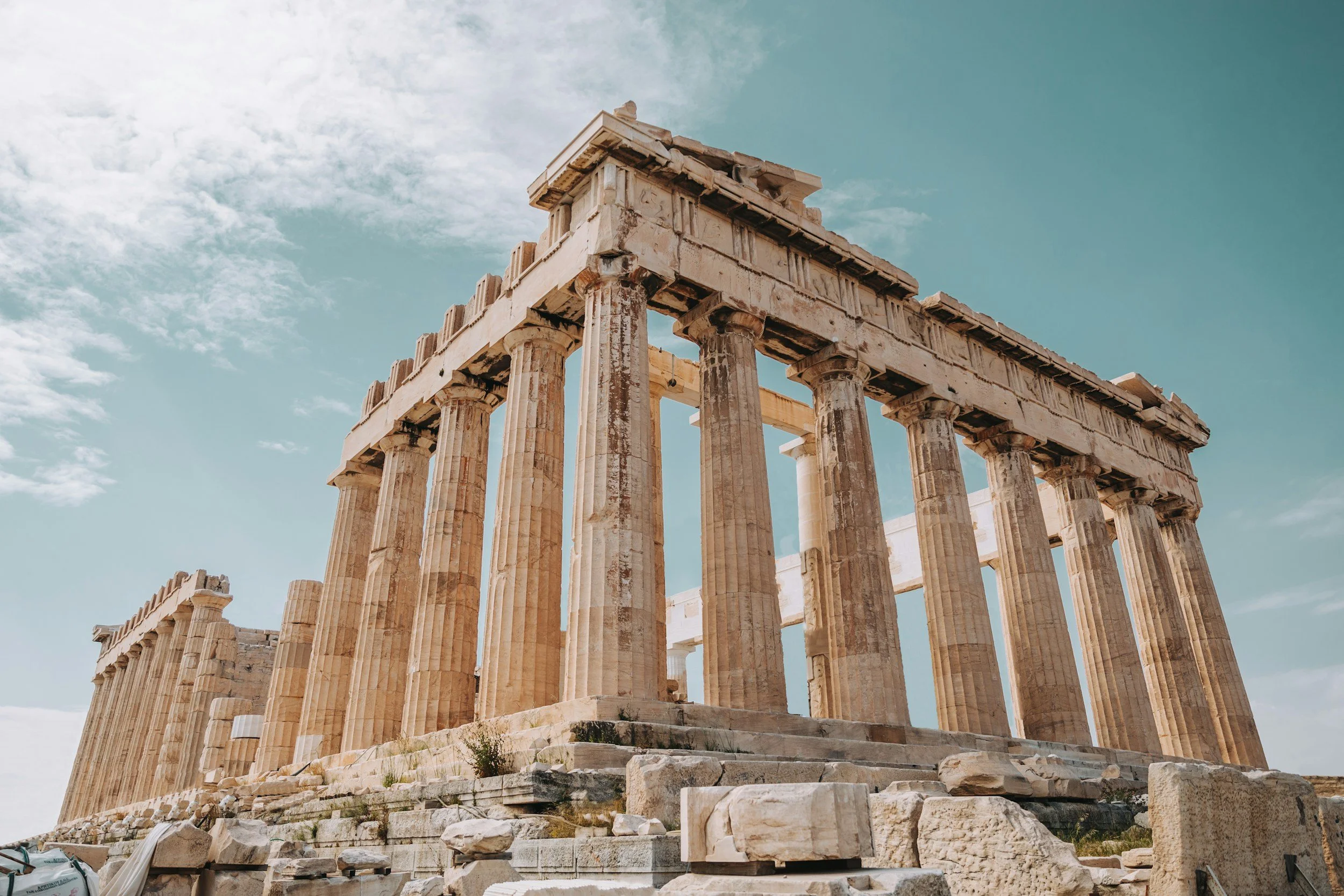
Most first-time Greece travelers treat Athens as a transit point — a single night between the flight and the ferry. It's a mistake. The city deserves two to three days minimum, and in summer it delivers on every level: the Acropolis at sunrise before the crowds arrive, the extraordinary National Archaeological Museum, the Monastiraki flea market on a Sunday morning, cocktails on rooftop terraces with the Parthenon lit above you.
The Plaka neighbourhood, curled around the base of the Acropolis hill, is perfect for slow evenings: small tavernas, neoclassical facades, the kind of outdoor seating that makes Athens feel like an open-air living room on summer nights. For cultural depth, the Odeon of Herodes Atticus — a Roman-era amphitheatre right below the Acropolis — hosts the Athens & Epidaurus Festival each summer, with world-class music, theatre, and dance performed under the open sky. Book tickets well in advance; productions sell out fast.
The city's food scene has matured into something genuinely world-class: natural wine bars in Psyrri, outstanding modern Greek restaurants in Kolonaki, a coffee culture that rivals any European capital. Build in time to actually enjoy it rather than sprinting for the 7am ferry to Santorini.
01Santorini
 Cyclades · Best June & September
Still the most photographed place in Europe, and still worth it. The caldera views from Oia at sunset remain one of the most genuinely stunning sights in the world — even with hundreds of people watching alongside you. What makes Santorini special beyond the photographs: the wine (volcanic Assyrtiko grown in basket-trained vines that look like nothing else in viticulture), the cave hotels carved directly into the cliff, and the prehistoric ruins of Akrotiri — the Pompeii of the Aegean — which almost nobody visits as thoroughly as they should.
Book your accommodation four to six months ahead without exception. June or early October give you the best combination of weather, manageable crowds, and hotel rates that won't make you wince. July and August are extraordinary in energy but punishing on the wallet — a good cliff-side suite regularly exceeds €600 a night at peak.
Don't Miss
A private caldera cruise at sunset, the Akrotiri Bronze Age ruins (often empty even in July), a wine tasting at a small estate rather than the big-name producers, and the hike from Fira to Oia along the caldera rim — one of the finest walks in Greece.
02Mykonos
 Cyclades · Best June & Early July
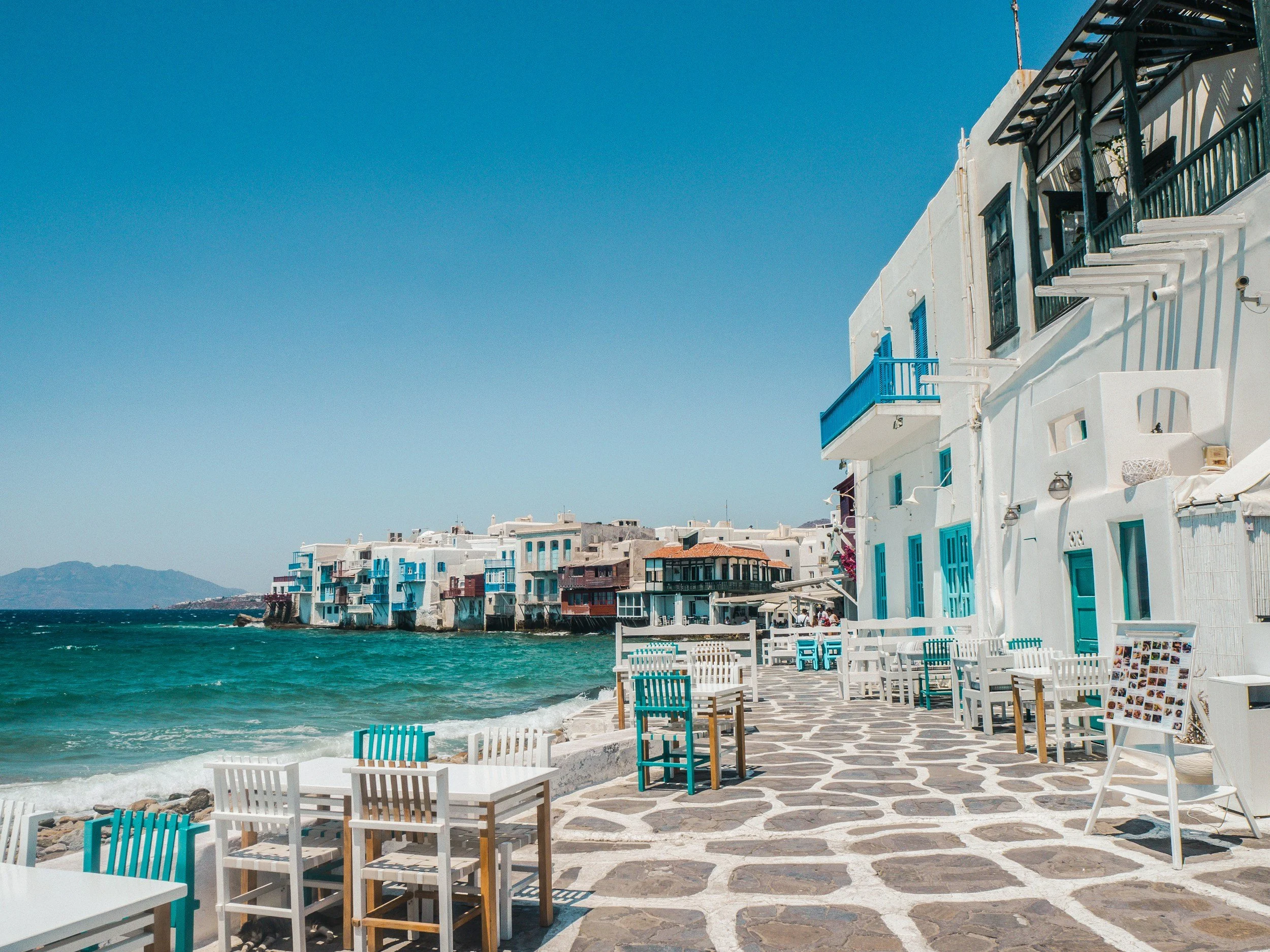
Mykonos in summer is an experience in pure Mediterranean hedonism — beach clubs at Scorpios and Nammos, narrow marble streets in Chora piled with bougainvillea, Little Venice's balconies hanging directly over the water, and one of the great sunset cocktail rituals in Europe. It's expensive and it knows it. Luxury hotel rates in August push past €700 a night at the top end, and the beach clubs charge what they like.
The smart move is June — the scene is alive and warm, rates are 30–40% lower, and the island has a lighter, more beautiful energy before the true peak hits. Whatever month you go, don't leave without taking the morning boat to Delos: the entire uninhabited island is a sacred archaeological site, the mythological birthplace of Apollo and Artemis, and one of the most important ancient ruins in the Greek world. Most people are back on Mykonos by lunch.
"Mykonos after midnight in July is one of the great summer experiences in Europe. But Mykonos at dawn, before the world wakes up, is better."03
Crete — Greece's Most Complete Island
 Crete · Best June & September
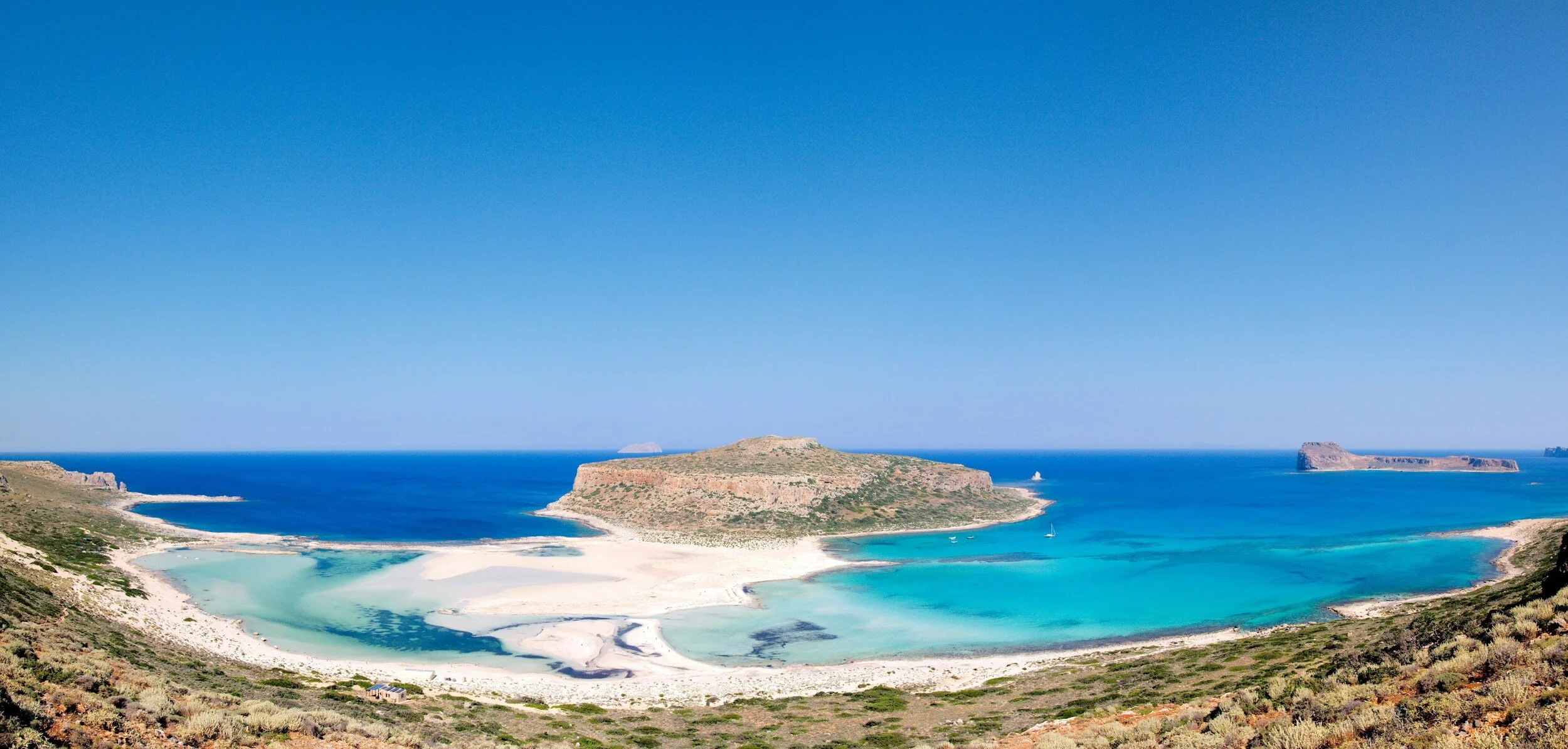
Crete is a world unto itself. Greece's largest island has the Venetian harbour of Chania, the pink sand of Elafonissi, the Samaria Gorge hike (16km of dramatic limestone canyon through Europe's longest gorge), the Palace of Knossos, and a food culture so distinct and sophisticated that it's been named a European Region of Gastronomy for 2026. It's also one of the most accessible and affordable of the Greek islands — direct flights from most of Europe, and 4-star hotels from around €120 per night in early summer.
The island divides into distinct personalities. Chania in the west is elegant and Venetian, with the finest harbour in the Aegean and an old town that rewards slow exploration. Heraklion is bigger and more urban, but houses an extraordinary archaeological museum and sits close to Knossos. The south coast — bathed by the Libyan Sea — is barely touched by mass tourism even in August, with wild beaches like Preveli (Palm Beach) and the village of Matala giving a completely different version of Crete.
Best Experiences
The Samaria Gorge hike (start early, end at the beach), a boat trip to Balos lagoon, exploring the Venetian lanes of Rethymno's old city, dining on dakos and slow-roasted lamb in a mountain village, and spending a morning at Knossos with a licensed archaeologist guide rather than wandering on your own.
Crete Quick Facts
- Best Time June and September — best weather, fewer crowds than August
- Avoid Ferragosto week (around August 15) — peak Italian tourist season
- Fly Into Chania (CHQ) or Heraklion (HER) — direct from most European hubs
- How Long Minimum 4–5 days; a week lets you properly explore east and west
- Don't Miss Elafonissi, Samaria Gorge, Knossos, Chania old town, south coast villages
Naxos — The Best Value in the Cyclades
 Cyclades · Best June–September
Naxos is the insider pick that's becoming harder to keep quiet. The largest island in the Cyclades, it offers the same whitewashed Cycladic beauty as Santorini and Mykonos at a fraction of the price. Four-star hotels average €125–€170 per night in July. The beaches at Plaka and Agios Prokopios are as beautiful as anything in Paros or Ios. The mountainous interior is extraordinary — stone villages, olive groves, and Mount Zas (Zeus's childhood mountain, according to mythology) accessible by well-marked hiking trails.
What sets Naxos apart is its food. The island produces its own cheeses, potatoes, olive oil, and the unique Kitron liqueur made from the leaves of the citron tree. Eating and drinking well here costs a fraction of what it does in Mykonos. The Portara — the towering marble gateway to an unfinished 6th-century BC temple — is one of the most romantic spots in the entire Aegean at golden hour. Combine a Naxos stay with a day trip to Koufonisia in the Small Cyclades and you've built one of the most rewarding two-island combinations in Greece.
05Paros — Cycladic Cool Without the Hype
 Cyclades · Best June & September
Often described as what Mykonos used to be before the superyachts arrived. Paros is chic, beautiful, and balanced — whitewashed villages, golden beaches, a windsurfing scene at Chrissi Akti that draws serious athletes from across Europe, and a harbour town in Naoussa that's one of the most photogenic in the Cyclades. Boutique stays from design hotels like Parilio sit alongside family-run guesthouses, and the food — fresh seafood at harborside spots in Naoussa, traditional tavernas inland — is consistently excellent without Mykonos pricing.
Ferries from Athens take about four hours (less on a fast ferry), and the island connects easily to Naxos, Milos, and the Small Cyclades. June and mid-September are the sweet spots: the weather is perfect, Golden Beach has wind for water sports, and the island quietens to a pace that feels genuinely restorative rather than frantic.
06Milos — The Rising Star
 Cyclades · Best June & September
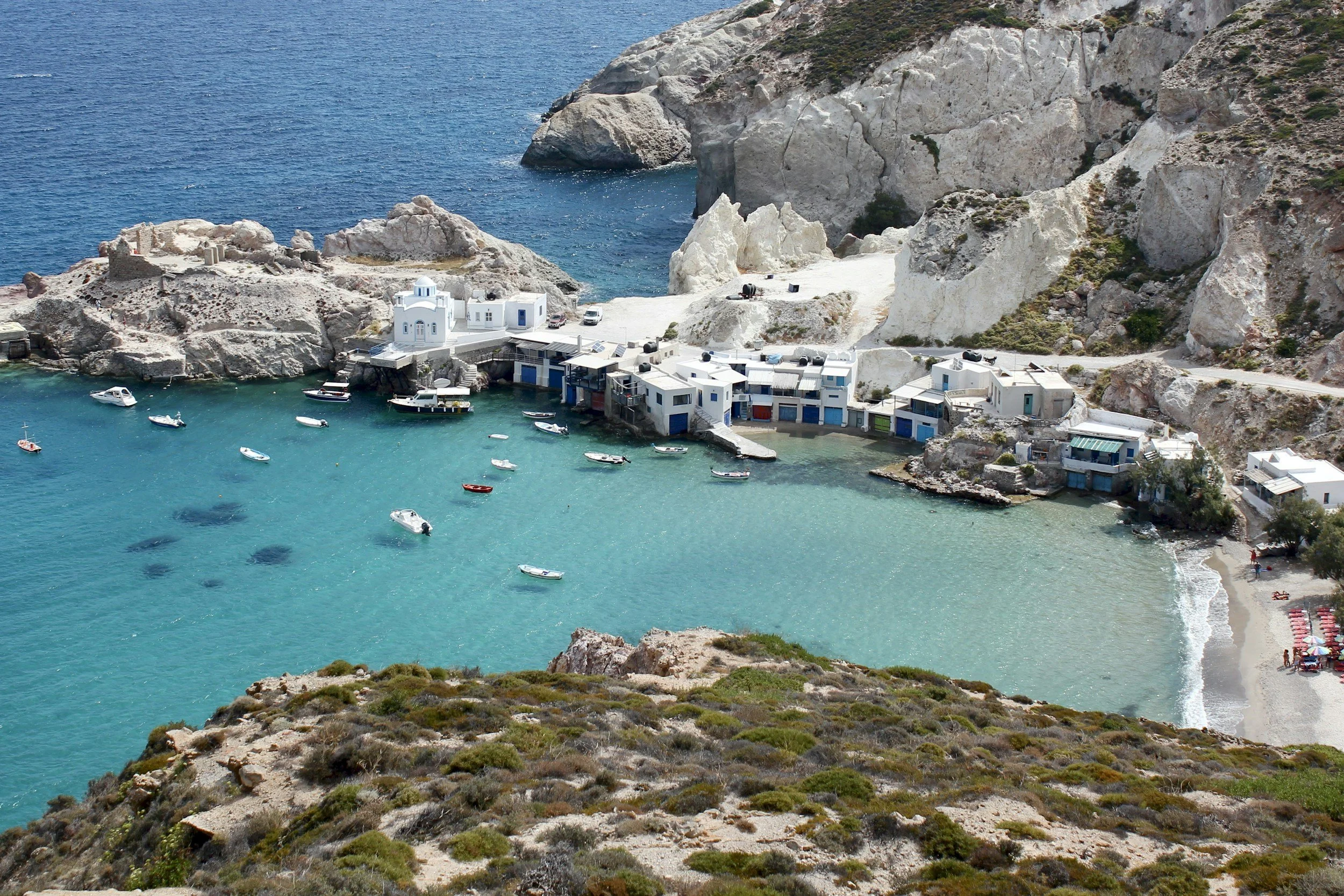
Milos has over 70 beaches — the most of any island in the Aegean — and a volcanic landscape that is genuinely unlike anything else in Greece. Sarakiniko is the standout: white pumice formations rolling into turquoise water that look like something between a lunar landing and a Hockney painting. Kleftiko's sea caves on the south coast are only reachable by boat and offer some of the finest snorkelling in the Mediterranean — the caves were once pirate hideouts and the water inside them turns an almost supernatural shade of blue. The fishing village of Klima, with its colourful boathouses (syrmata) built directly into the waterline, is one of the most photographed corners of the Cyclades.
Milos is increasingly talked about as the next great Cycladic island, which means now is the time to go. It's still far quieter than Santorini or Mykonos, accommodation remains genuinely affordable, and the pace of island life is unhurried in a way that's becoming rarer across the archipelago. The Venus de Milo was found here in 1820 — the Roman catacombs (older than those in Rome) add archaeological depth to what would already be a compelling island on its beaches alone.
"Milos is what people imagine all the Greek islands are like before they've actually been. Somehow it lives up to it."07
Corfu — the Green Island
 Ionian Sea · Best June & Early July
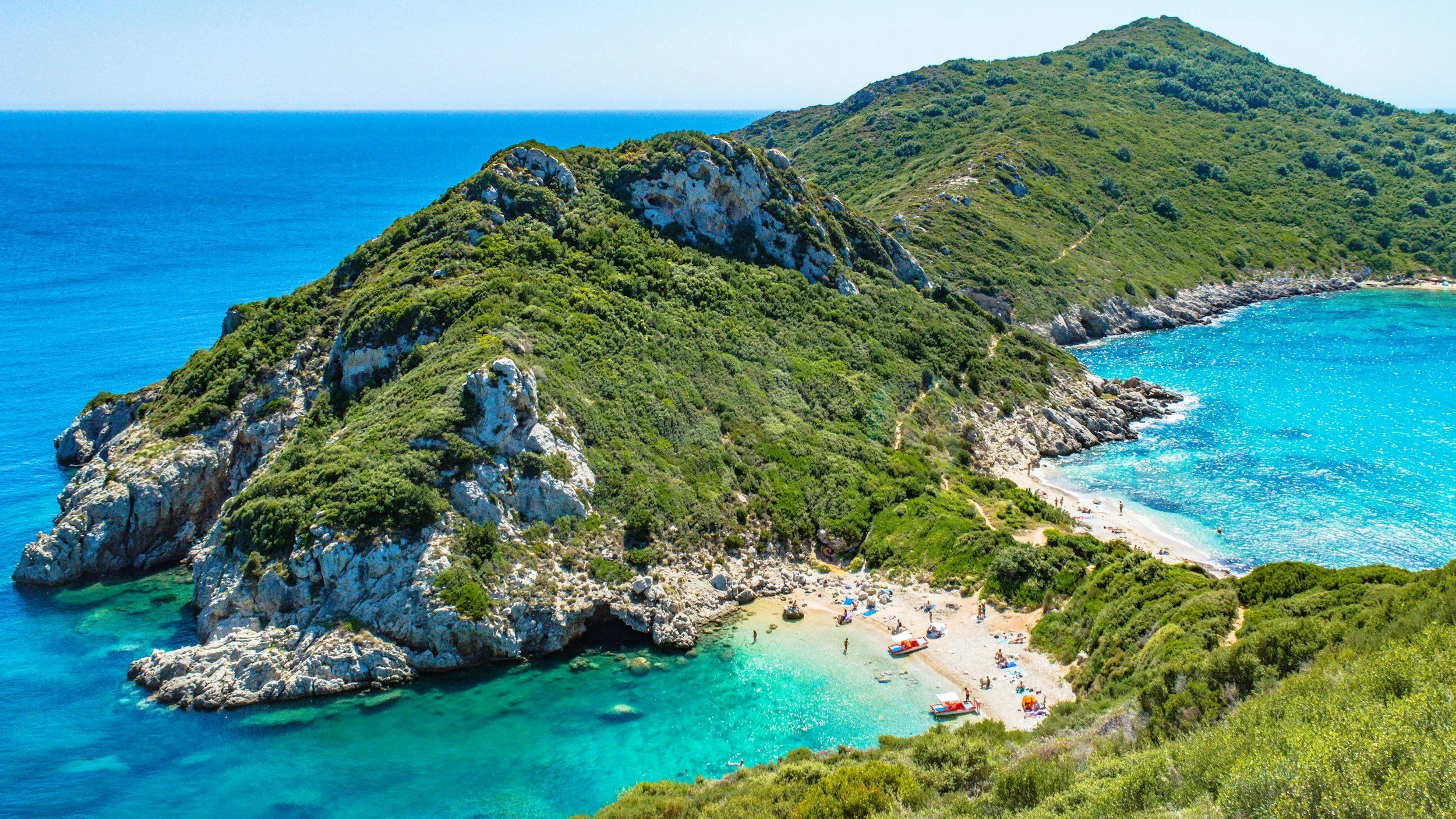
Corfu is the anomaly among Greek islands — lush, green, and carrying the distinct cultural overlay of Venetian, French, and British occupation over five centuries. The Old Town of Corfu is UNESCO listed: a warren of honey-coloured Venetian facades, covered arcades (the Liston, modelled on the Rue de Rivoli in Paris), Byzantine churches, and two massive fortresses overlooking the sea. It's one of the most beautiful historic townscapes in the Mediterranean.
Beyond the town, Corfu is all olive groves, clifftop monasteries, and extraordinary bays. Paleokastritsa, on the northwest coast, is framed by forested hills and Byzantine monastery views. The inland villages of the Troumpeta pass are almost entirely untouched by tourism. The island's Italian-influenced cuisine — sofrito, bourdeto, pastitsada — is its own distinct tradition, quite different from mainland Greek cooking, and worth seeking out in the old town rather than at the tourist-facing tavernas along the beach strip.
The Lesser-Known Islands — Where Greece Still Feels Like Itself
The famous islands are famous for good reason. But Greece has hundreds more, and the ones most travelers never reach are often the finest. These are the islands where dinner is still whatever came off the boat that morning, where nobody is charging you for a sun lounger, and where the pace of life follows the tide rather than the tourist season.
08Folegandros — Romance Without Performance
 Cyclades · Best June & September
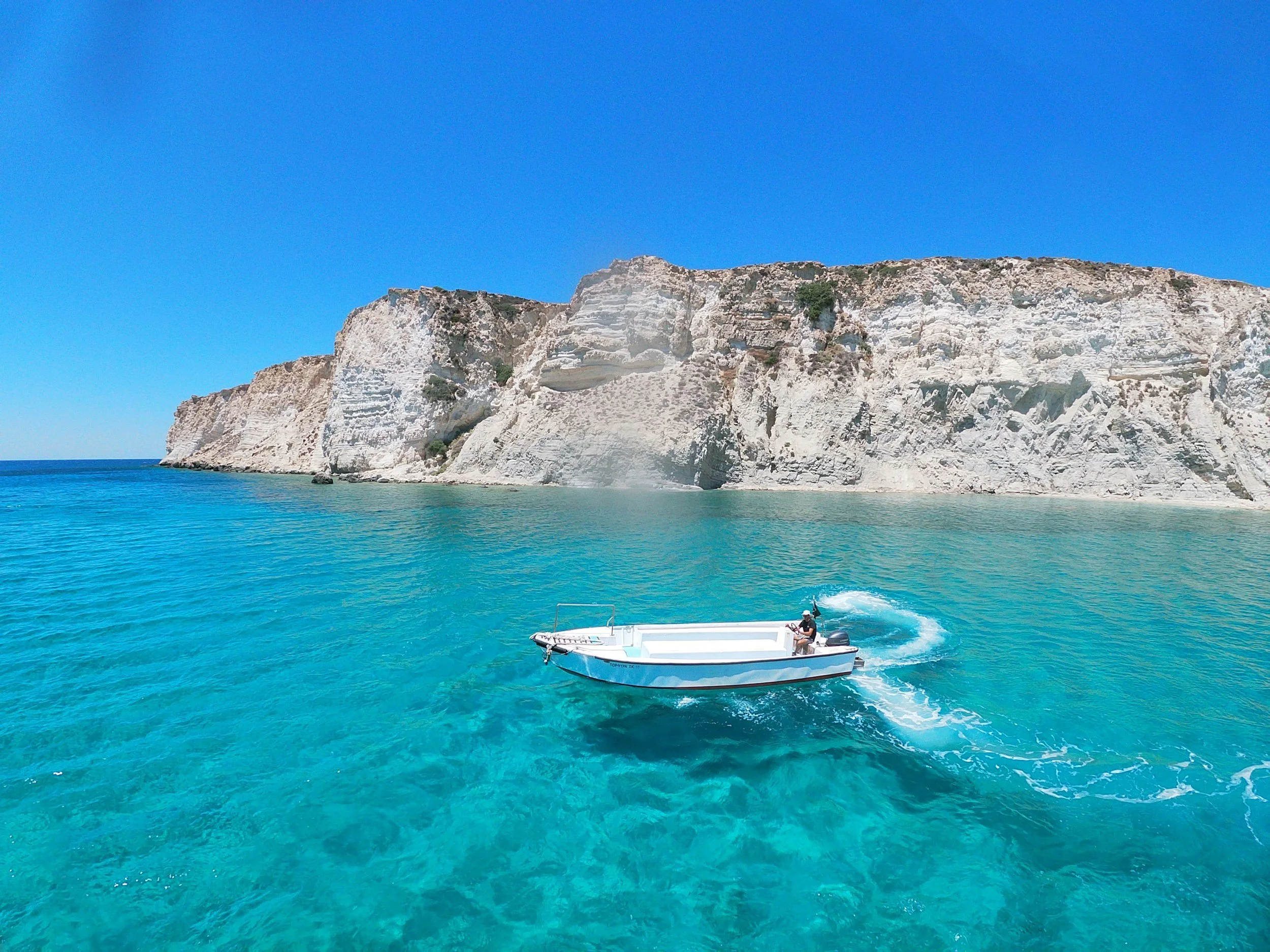
Just an hour from Santorini by fast ferry, but a world apart in mood. Folegandros is small (13km long), car-minimal, and built around Chora — one of the finest village squares in the Cyclades, perched on a clifftop high above the sea. There are no sandy beaches to speak of, but the rocky coves are beautiful and the swimming is excellent. Tavernas here still cook the way they did thirty years ago: grilled octopus on the terrace, carafes of local wine, and no rush from anyone to free up your table.
Folegandros is the island people describe when they say they want to find somewhere that hasn't been ruined yet. It hasn't been ruined. Go in June when the wildflowers are still on the hillsides and the Chora square belongs mostly to locals.
09Koufonisia — The Water is Impossible
 Small Cyclades · Best June–September
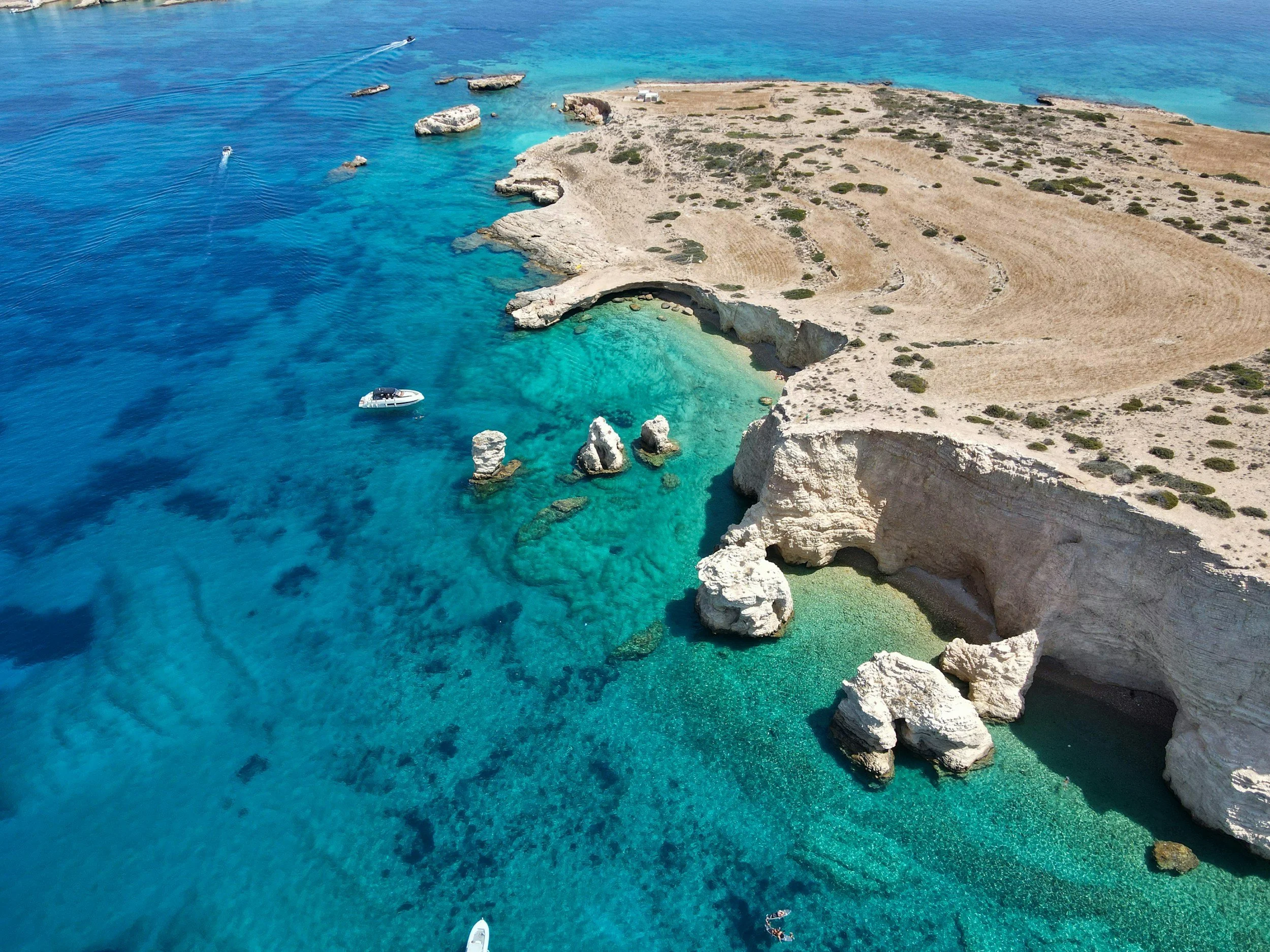
Part of the Small Cyclades chain east of Naxos, Koufonisia has fewer than 400 permanent residents and one of the most extraordinary stretches of water in the entire Aegean. The sea is so clear that fishing caïques appear to float in mid-air above the white sand. The island is small enough to walk end to end in a day, the restaurants are outstanding, and the vibe is the unhurried, linen-draped ease that people spend their whole Mykonos holiday searching for without ever quite finding.
Combine Koufonisia with neighbouring Schinousa and Iraklia for a Small Cyclades island-hopping route that covers three of the least-visited, most beautiful islands in Greece in a single arc. It takes more planning than a standard Cyclades trip — ferries run a few times a week — but that's the point.
10Sifnos — Greece's Food Island
 Cyclades · Best June & September
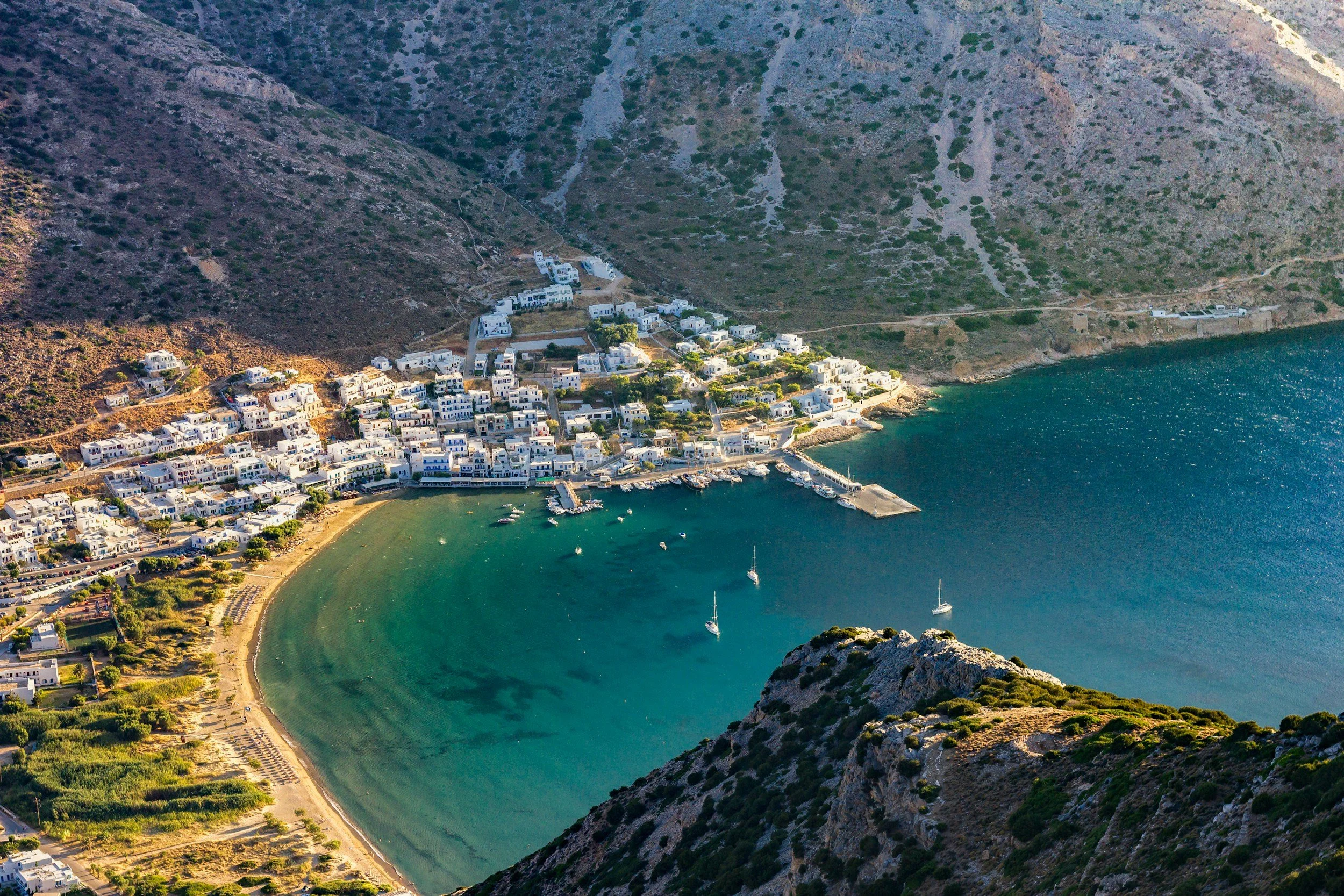
The culinary capital of the Cyclades. Sifnos has an obsessive food culture rooted in ceramic cooking pots, slow-baked chickpea stews (revithada), and braised lamb dishes that have been refined over generations. The island's pottery tradition is centuries old and still active — you can buy the exact ceramic casseroles used for those chickpea stews in workshops throughout the island. Artemonas and Kastro are two of the most beautiful villages in the archipelago: immaculate whitewashed streets that feel genuinely lived-in rather than preserved for Instagram.
The hiking network on Sifnos is exceptional — a web of old kalderimi (cobbled donkey paths) connecting villages, monasteries, and quiet coves. Combined with what is genuinely among the best eating in the Greek islands, Sifnos makes a compelling case for spending your entire trip here rather than rushing between three islands. Come in June when the islanders feel the joy of having it to themselves again.
11Amorgos — The End of the World (in the Best Way)
 Cyclades · Best June & September
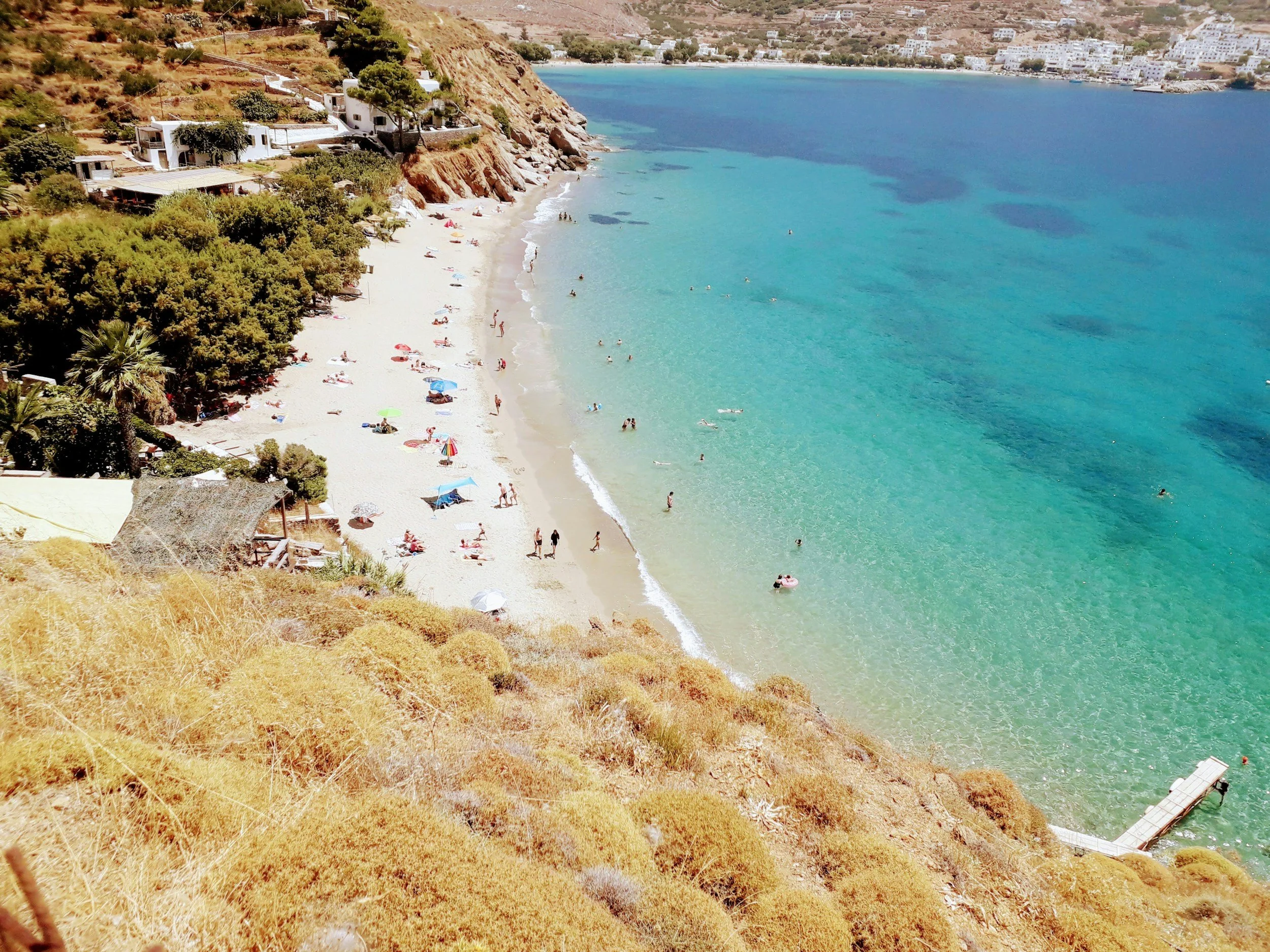
Remote, dramatic, and unforgettable. Luc Besson filmed The Big Blue in Amorgos for good reason — the water off its coast is among the clearest in the Mediterranean, and the island's personality is defined by sheer 300-metre cliffsides plunging into cobalt. The Hozoviotissa Monastery, a whitewashed structure built directly into a cliff face 300 metres above the sea, is one of the most visually striking buildings in all of Greece. Inside, monks still offer visitors a glass of raki and a piece of loukoumades (honey puffs) — one of the more unexpectedly touching moments in any Greek island trip.
Amorgos takes at least six hours to reach from Athens by ferry. That length of journey keeps it exactly as it should be: the kind of island where you arrive not quite sure what day it is and leave not quite willing to go back to the world that has schedules.
12Paxos — the Ionian's Best-Kept Secret
 Ionian Sea · Best June–September
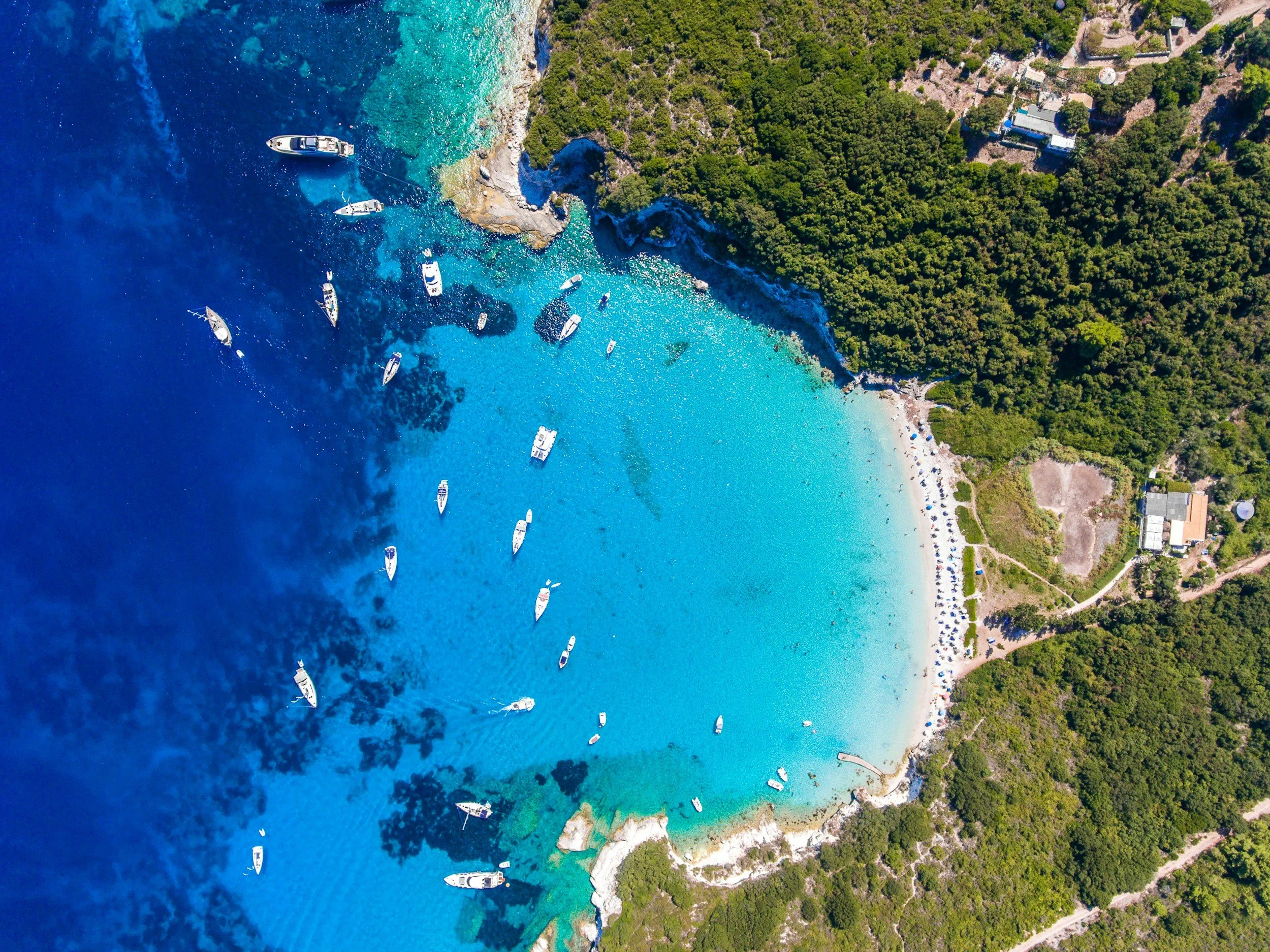
Paxos is the Ionian's most quietly coveted island — small, olive-canopied, and just south of Corfu, with some of the bluest water in Greece. The sea caves at Antipaxos (a 20-minute boat ride away) are extraordinary: sea arches, turquoise grottos, and empty beaches that feel genuinely private even in July. The harbour at Gaios is one of the most charming in the Ionian: small enough to walk in twenty minutes, with tavernas serving grilled fish, local olive oil, and cold white wine as the light fades over the boats.
Paxos attracts a devoted crowd of returning visitors and sailing enthusiasts who know it as one of those places where nothing much happens and everything is perfect. The island's own olive oil is exceptional and available directly from the producers. Stay for three nights minimum; most people who book three end up wishing they'd booked five.
13Ikaria — the Island That Does Things Differently
 Northeast Aegean · Best June–September
Ikaria is one of the world's five Blue Zones — places where people live measurably longer than average — and the island takes a certain pride in its resistance to the way the rest of the world operates. Ikarians are famously indifferent to schedules, deeply communal, and given to panigyria: all-night outdoor festivals held on saints' days throughout summer where entire communities eat, drink wine, and dance until dawn. You are welcome. Join in.
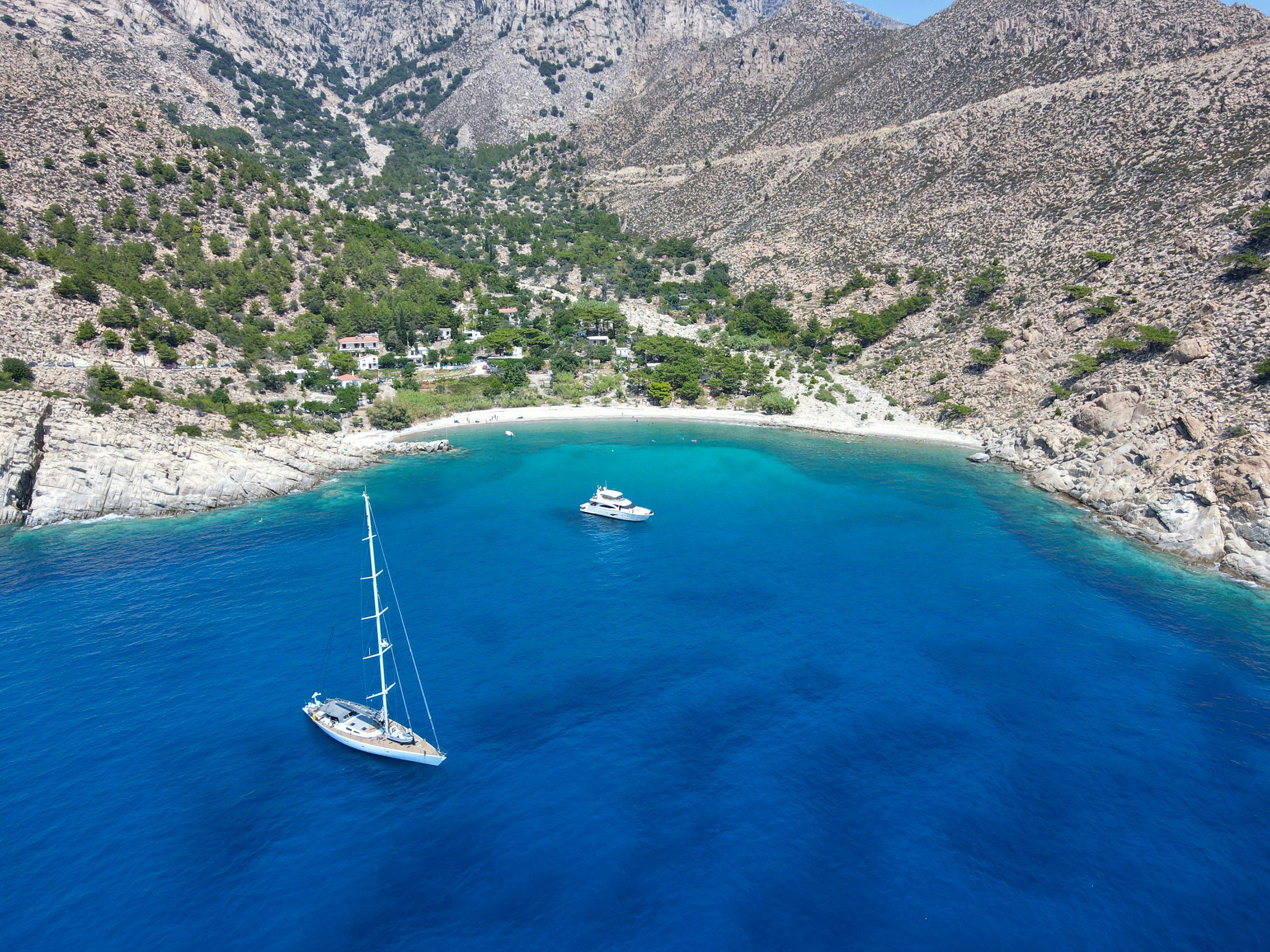
The island is wild and hilly, the beaches are beautiful and reliably uncrowded, and the hot springs at Therma have been used for therapeutic bathing since antiquity. Come with no fixed agenda, sleep when you're tired, eat when you're hungry, and stay out as long as there's something to stay out for. Ikaria is the best argument Greece has for the idea that a different way of living is possible — and worth a detour to witness, even briefly.
"Every trip to Greece is about finding the version of it that stays with you longest. For a lot of travelers, it ends up being one of the islands nobody told them to go to."
Beyond the Islands — The Greek Mainland
Most first-time visitors to Greece spend their entire trip on the islands and return home without setting foot on the mainland beyond Athens. It's a significant miss. The Greek mainland contains some of the most extraordinary experiences in the entire country.
The Peloponnese
The giant peninsula hanging below central Greece is consistently described as one of the most underrated destinations in the entire Mediterranean. It contains Mycenae (where Agamemnon's death mask was discovered), Epidavros (whose ancient theatre has acoustics so precise you can hear a pin drop from the back row — and still hosts performances each summer as part of the Athens & Epidaurus Festival), Nafplio (the most beautiful small city in Greece, with a Venetian waterfront and a castle-topped hill rising above it), and the wild Mani peninsula — stone tower villages, dramatic coastline, and a fierce independent spirit that still feels palpable in the villages. Condé Nast Traveler has named the Peloponnese one of its top European picks for 2026. Get there before the mainstream catches on.
Meteora
One of the most visually astonishing places in Europe. Meteora's 14th-century monasteries are built on top of vast sandstone rock pinnacles — literally perched on the summits of towers of stone that rise hundreds of metres from the Thessalian plain below. They were used as filming locations for Game of Thrones and a James Bond film, which tells you everything about their visual impact. Visit at dawn or dusk and you'll have the place almost to yourself; midday in summer brings significant crowds. A five-hour train from Athens, or a two-hour drive from the Peloponnese.
Delphi
The sanctuary at Delphi sits on a dramatic hillside above the Gulf of Corinth and was, for several centuries, considered the centre of the known world. The physical presence of the ruins — the Temple of Apollo, the ancient theatre with its views over the olive plain below, the Sacred Way leading up through centuries of votive offerings — is genuinely moving, not just historically interesting. Go at the edges of the day when the light is soft and the site is quieter; a licensed guide who's also an archaeologist makes the experience incomparably richer.
How to Plan the Perfect Greece Summer Trip
The biggest mistake Greece travelers make is booking too late, moving too fast, or not allowing enough time to let the islands actually work their effect. Here's what makes a summer Greece trip exceptional.
Book Earlier Than You Think
For the best hotels in Santorini, Mykonos, and Crete, booking windows of four to six months are now standard for peak summer. The finest cliff-side suites in Santorini, the best boutique stays in Chania, the most sought-after Paros properties — these go quickly. Aim to have key accommodation confirmed by February or March for a June-to-August trip.
June and September Are Often Better
The sea is warm, the evenings are long, and the crowds are a fraction of August. June in the Cyclades gives you perfect weather, green hills not yet scorched by high summer, and hotel rates 20–35% below peak. September is the insider's choice: the Aegean reaches its warmest temperature (26–28°C), school holidays are over, and the islands recover a pace of life that feels much more like the Greece people come looking for.
Two or Three Islands, Done Properly
The urge to visit five islands in ten days is understandable but counterproductive. Too much time is spent on ferries, too little time is spent actually being somewhere. Two islands in ten days, or three in fourteen, is the sweet spot: enough variety to get a real sense of how different the islands are from each other, enough time on each to stop rushing and start actually feeling it.
Plan the Ferries as Carefully as the Hotels
Blue Star Ferries and Hellenic Seaways are the main operators for the Cyclades and Dodecanese, and they sell out in July and August — particularly on popular routes like Athens–Santorini and Mykonos–Paros. Book on the official ferry websites or through Ferryhopper as soon as your accommodation is confirmed. For the Small Cyclades, check schedules carefully: some routes run two to three times a week and are subject to weather cancellation.
Greece Summer — Essential Planning
- Best Months June for value and calm; July–August for peak energy; September for warm seas and space
- Book How Early 4–6 months for Santorini and Mykonos; 2–3 months for lesser-known islands
- Ferries Book Blue Star Ferries and Hellenic Seaways well in advance — July and August routes sell out
- Flying In Direct flights to Athens, Heraklion, Corfu, Rhodes, Mykonos, and Santorini from most European hubs
- Athens Allow 2–3 days; don't treat it as a transit stop
- Island Strategy 2–3 islands in 10–14 days — resist the urge to overdo it
- The Heat July–August on the mainland can hit 40°C; the Meltemi wind cools the Cyclades significantly
- Custom Tours Discovery Escapes Greece itineraries — tailor-made to your travel style and pace
Frequently Asked Questions
What are the best Greek islands to visit in summer?
It depends on what you're looking for. Santorini for caldera drama and extraordinary wine. Mykonos for glamour and nightlife. Crete for culture, food, and beaches combined. Naxos for the best value in the Cyclades. Corfu for lush landscapes and Venetian architecture. For lesser-known alternatives: Folegandros for romance, Milos for volcanic scenery and 70+ beaches, Koufonisia for crystal water and unhurried days, Sifnos for the best food on any Greek island, and Paxos for olive-grove quiet and blue Ionian sea caves.
When is the best time to visit Greece in summer?
June and September are the most rewarding months for experienced travelers — warm, long days, manageable crowds, and notably lower prices than July–August. That said, peak season has its own extraordinary energy: the islands are alive, the nights are warm, and the Mediterranean is at its most vivid. If you go in July or August, book everything five to six months ahead without exception.
Which are the least crowded Greek islands?
Folegandros, Amorgos, Koufonisia, Sifnos, and the Small Cyclades are significantly quieter than Santorini and Mykonos even in August. In the Ionian, Paxos and Meganisi are beautifully calm. Ikaria, in the Northeast Aegean, is one of the most genuinely off-the-radar large islands in Greece. None of these are empty — but they retain the character of a place that hasn't been overrun, and that character is increasingly what people travel to Greece to find.
How many days do you need in Greece?
Ten to fourteen days is the ideal window for a trip combining Athens with two or three islands. Seven days works for a focused island trip with two destinations maximum. For a comprehensive experience that includes the mainland — Peloponnese, Meteora, Delphi — plus islands, allow fourteen to twenty-one days. We'd always recommend fewer destinations with more time over the reverse.
Is Greece expensive in summer?
It has become more expensive. Greece's holiday prices rose approximately 7.5% in the past year, and Santorini and Mykonos in July–August now rival the French Riviera at the top end. However, lesser-known Cycladic islands — Naxos, Folegandros, Sifnos — still offer excellent 4-star stays for €120–€170 per night. Crete is the best value among the large islands. Dining, transport, and activities remain genuinely affordable throughout the country compared to Western European prices.
Plan Your Greece Trip with Discovery Escapes
We design tailor-made Greece itineraries for travelers who want the real thing — iconic islands, hidden gems, curated stays, and a journey that feels personal from the first day to the last.
Start Planning