Rome to Barcelona By Train Trip
Rome to Barcelona by Train: The Ultimate 10-Day Itinerary for 2026
The route from Rome to Barcelona is one of the great European journeys — not a transit, not a necessity, but a trip worth taking for the journey itself. Ancient Rome, Renaissance Florence, the painted villages of Cinque Terre clinging to limestone cliffs above the Ligurian Sea, the glamour of the French Riviera, Monaco's improbable extravagance, and finally Barcelona: Gaudí's city, the Mediterranean's most energetic and beautiful capital. Ten days, three countries, seven cities. Done properly, it's one of the finest trips in Europe.
This guide breaks it down day by day — what to see, how to move between each destination, what the trains are like, what to pack, and where the optional detours are worth taking. Whether you're planning it independently or want someone to handle all of it for you, this is the complete picture.
The Route at a Glance
- Route Rome → Florence → Cinque Terre → Nice → Monaco → Barcelona
- Duration 9–10 days / 3 countries / 7 cities
- Transport High-speed train throughout Italy and to France; short flight Nice–Barcelona
- Best Months May, June, September — warm without extreme August heat or crowds
- Fly In/Out Fly into Rome Fiumicino (FCO), fly home from Barcelona El Prat (BCN)
- Tour Option Discovery Escapes guided tour from €2,199 — hotels, trains, guides, all included
Rome — Arrival & the Ancient City
 Italy · Arrive by midday · Stay 2 nights
Fly into Rome Fiumicino and get to your hotel by midday — the city starts immediately. The afternoon is for orientation: walk from your hotel into the historic centre and let the city reveal itself. Toss a coin at the Trevi Fountain (a genuine ancient tradition, not a tourist invention), climb the Spanish Steps before the evening crowds arrive, and find a table in Piazza Navona for the first aperitivo of the trip. The piazza — three fountains, baroque facades, street artists, restaurant terraces — is Rome at its most theatrical and is a perfect introduction to what's coming.
In the evening, explore Trastevere: the medieval neighbourhood across the Tiber is Rome's most atmospheric, with narrow cobbled lanes, ivy-covered facades, and trattorias serving cacio e pepe and saltimbocca at outdoor tables lit by string lights. Book a table rather than walking in at peak summer — the best spots fill by 8pm.
Where to Stay
Stay as close to the historic centre as possible — the area around Campo de' Fiori, the Pantheon, or Trastevere puts you walking distance from everything. Hotels like the NH Roma (used on the guided tour) are ideally located for early starts at the major sites.
Day 2Rome — Colosseum, Roman Forum & the Vatican
Start at the Colosseum at opening time — 9am — before the day-trip groups arrive from the cruise ships. The largest amphitheatre ever built, completed in 80 AD, held up to 80,000 spectators for gladiatorial games that ran for four centuries. With a guided tour, the scale and the story of the place lands completely differently from wandering it alone. Book tickets well in advance for summer; walk-up entry in July and August can mean a two-hour queue.
The Roman Forum is directly adjacent and included on the same ticket — don't skip it. The ruins of temples, basilicas, and market buildings along the Via Sacra are the physical remains of the centre of the Roman Empire, and standing in them with a knowledgeable guide brings the ancient world into focus in a way that photographs and books can't. Spend at least 90 minutes here.
In the afternoon, cross the Tiber for the Vatican Museums and the Sistine Chapel. This requires a separate booking and significant advance planning in summer — the queue for walk-up entry can exceed three hours. With a timed-entry guided tour, you bypass the queue entirely and see Michelangelo's ceiling with context that transforms the experience. St Peter's Basilica and Square are free to enter and among the most extraordinary architectural spaces in the world.
"Rome rewards the traveler who goes slowly and early. The Colosseum at 9am, the Forum at 10, an espresso in a bar that's been there since 1930 — that's the version of Rome most people never find."Days 3–4
Florence — the Renaissance in Two Days
 Italy · Train from Rome: 1hr 30min · Stay 2 nights
The Train
The Rome to Florence Frecciarossa high-speed train runs every 30 minutes throughout the day and covers the journey in 1 hour 30 minutes — one of the best train rides in Europe for its combination of speed, comfort, and landscape. Book on Trenitalia or via Trainline at least 2–3 weeks ahead in summer for the best prices. Standard class is spacious and comfortable; first class adds table service and wider seats for a modest premium. Both Rome Termini and Florence Santa Maria Novella stations are central and walkable to your hotel.
Day 3 — Florence by Foot
Arrive late morning and go straight to the Duomo. Brunelleschi's dome — built between 1420 and 1436 without scaffolding, using an engineering method he invented himself — is the defining sight of Florence and one of the most extraordinary feats of construction in human history. A guided walking tour of the historic centre covers the Uffizi Gallery courtyard (the museum itself requires a separate booking weeks in advance), the Ponte Vecchio spanning the Arno, Piazza della Signoria with its outdoor sculpture collection, and the Medici Chapels. The afternoon belongs to Oltrarno — the neighbourhood south of the river, less touristed, full of artisan workshops, independent bookshops, and local restaurants. Find a terrace and eat well.
Day 4 — Free Time or Tuscany Day Trip
A full free day in Florence is one of the best gifts an itinerary can give you. The Uffizi Gallery — Botticelli's Birth of Venus, Michelangelo's Doni Tondo, rooms of Leonardo — deserves three hours minimum and rewards booking months ahead. The Accademia has Michelangelo's David. The Boboli Gardens above Oltrarno are spectacular in summer. Alternatively, the optional Pisa, Siena, and San Gimignano day trip covers three of Tuscany's finest towns in a single efficient circuit: Pisa's Leaning Tower (more impressive in person than any photograph suggests), the medieval streets of Siena, and the extraordinary skyline of San Gimignano with its preserved medieval towers. Worth every hour.
Florence Practical Details
- Train Rome Termini → Florence Santa Maria Novella, Frecciarossa, 1hr 30min
- Book Ahead Uffizi Gallery and Accademia (David) — book weeks in advance in summer, not days
- Don't Miss Duomo at sunrise, Ponte Vecchio at dusk, dinner in Oltrarno
- Optional Pisa, Siena & San Gimignano day trip with lunch — €105 on the guided tour
- Hotel C-Hotels Ambassador (used on guided tour) — 4-star, central location
Cinque Terre — Five Villages, One Extraordinary Coast
 Italy · Train from Florence: 2hrs · Stay 2 nights
The Train
Florence to La Spezia takes approximately two hours by regional train, changing at Pisa Centrale. La Spezia is the gateway to Cinque Terre — the five UNESCO-listed villages (Monterosso, Vernazza, Corniglia, Manarola, Riomaggiore) are all reachable by the local train that runs through the tunnels cut into the Ligurian cliffs, stopping at each village. The journey between villages takes 5–10 minutes. Buy a Cinque Terre Card for unlimited train travel between the villages; it also covers the coastal hiking paths if you want to walk between them.
Day 5 — Arrival and First Village
Check into your hotel in La Spezia (a practical base for the area with better value accommodation than the villages themselves) and head immediately to the nearest village. Riomaggiore — the southernmost — is ten minutes away by train and makes a perfect first evening: coloured houses stacking up the hillside from the harbour, a single main lane of restaurants and wine bars, and the Ligurian Sea below. Eat at a restaurant with a harbour view and order whatever the kitchen says came off the boat that morning.
Day 6 — The Full Cinque Terre Circuit
The guided day tour covers Vernazza, Monterosso, and Riomaggiore — the three most photogenic and distinct villages on the route. Vernazza, built around a natural harbour with a medieval castle above it, is widely considered the finest village in Cinque Terre and is extraordinary in the morning before the day-tripper crowds arrive from La Spezia. Monterosso, the largest village and the only one with a proper beach, is the place to eat: anchovies here are a local specialty and are cured in the way they have been for centuries. The guided tour includes a tasting of limoncino — the local lemon liqueur — which is exactly as good as it sounds on a warm afternoon in June. An optional boat cruise between the villages offers a completely different perspective on the cliffs and coloured facades from the sea.
"Cinque Terre from the water — the five villages seen in a single arc of coastline, the cliffs rising above them — is one of those sights that makes you wonder how a place this beautiful exists and why it took you so long to find it."Days 7–8
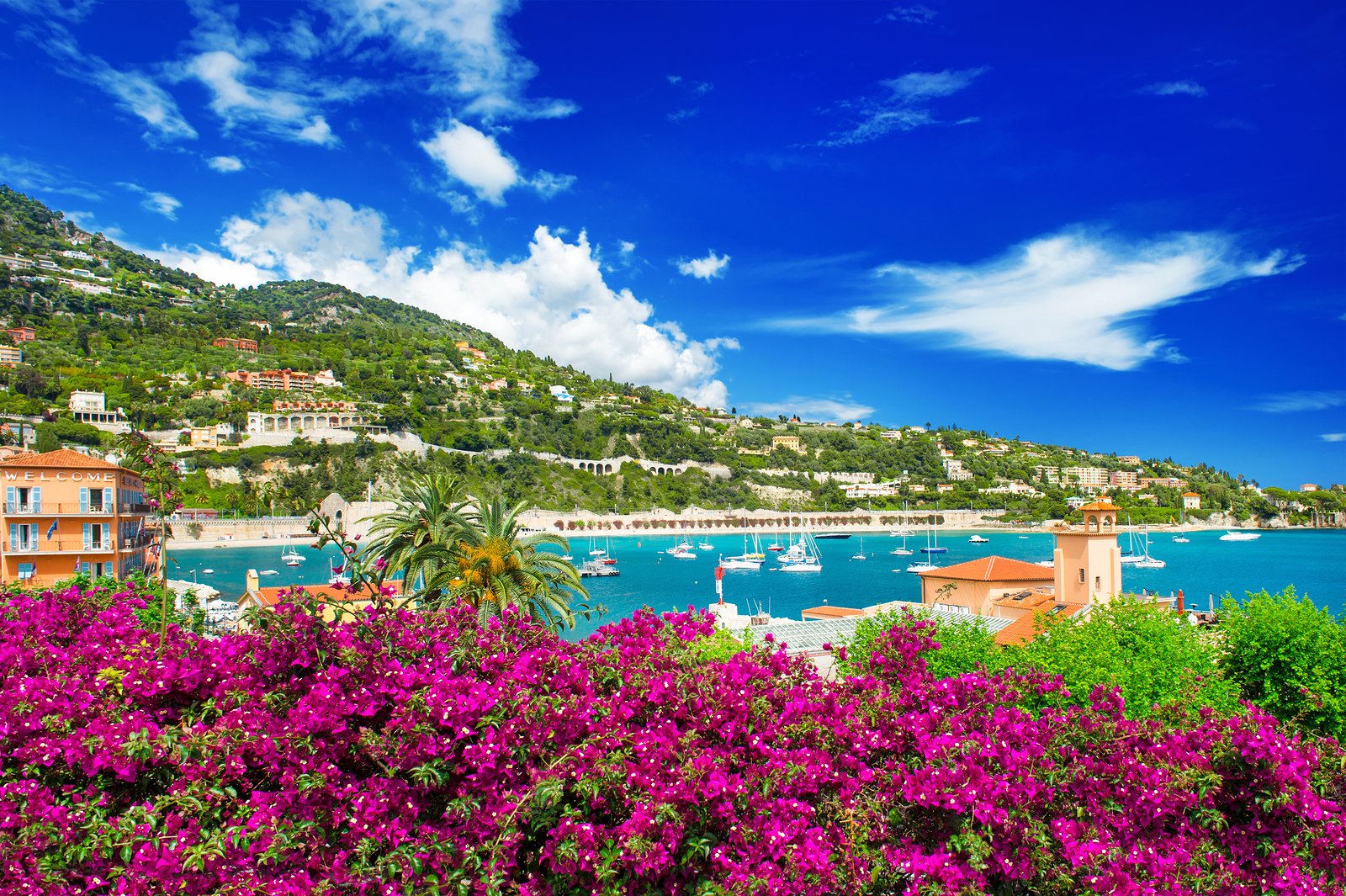
Nice & the French Riviera
 France · Train from La Spezia: 3hrs · Stay 2 nights
The Train
The La Spezia to Nice train runs along one of the most beautiful stretches of railway in Europe — the Ligurian coastal line hugs the cliffs above the Mediterranean for much of the three-hour journey, passing through the Italian Riviera towns of Levanto, Sestri Levante, and Genoa before crossing the border at Ventimiglia and running along the French coast through Menton and Monaco to Nice. Book a window seat on the sea side (right side travelling west) and don't spend the journey looking at your phone. The total journey is around three hours; book on Trenitalia for the Italian portion and SNCF for the French side, or use Trainline which covers both.
Day 7 — Nice and the Old Town
Nice is the most liveable city on the French Riviera — large enough to have genuine urban energy, small enough to feel like a neighbourhood rather than a resort. The Promenade des Anglais, the famous seafront boulevard stretching seven kilometres along the Baie des Anges, is best experienced on foot in the early morning before the beach fills. The Vieux-Nice (Old Town) is a different city entirely: a dense Baroque grid of terracotta facades, outdoor markets, and restaurants serving socca (a chickpea flatbread unique to Nice), salade niçoise, and fresh pasta with seafood. Cours Saleya market in the morning is one of the finest food markets in France. In the evening, the restaurants on the Quai des États-Unis serve fresh Mediterranean fish at outdoor tables with harbour views. Order the bouillabaisse.
Day 8 — Monaco and Èze
The day trip along the Côte d'Azur covers two of the most extraordinary stops on the entire route. The medieval village of Èze — perched on a clifftop 400 metres above the sea between Nice and Monaco — is one of the most dramatically situated villages in France: cobblestone alleys, a ruined castle at the summit, and views along the coast that stretch to the Italian border. The Fragonard perfume factory in Èze, one of the historic houses of the French fragrance industry, offers a tour of the production process that is more genuinely interesting than it sounds.
Monaco is twenty minutes further along the coast and operates on its own laws of physics. The Formula 1 circuit — the most famous street circuit in the world — runs through the actual streets of the principality; you can walk the pit straight, the Hairpin, and the tunnel section between Casino Square and the harbour entirely for free. The Prince's Palace changing of the guards ceremony happens daily at 11:55am and is worth timing your arrival for. The casino at Monte-Carlo requires a €10 entry fee but is one of the most beautiful interiors in the world regardless of whether you play.
Nice & the Riviera Practical Details
- Train La Spezia → Nice, coastal route, approximately 3hrs — book window seat, sea side
- Monaco 25 min from Nice by train (€4 each way) or by guided coach on the day trip
- Don't Miss Cours Saleya morning market, Old Town socca, Èze clifftop views, Monaco F1 circuit walk
- Optional Cannes and Antibes half-day — 30–45 min from Nice by train
- Hotel Mercure Nice Centre (used on guided tour) — 4-star, walking distance to Old Town and Promenade
Barcelona — the Final Destination
 Spain · Flight from Nice: 1hr 30min · Stay 2 nights
Nice to Barcelona — Why Fly
The direct train from Nice to Barcelona was discontinued in 2013 and has not yet been reinstated, making a short flight the most practical option. The Nice to Barcelona flight takes approximately 1 hour 30 minutes and is serviced by several budget carriers (easyJet, Vueling, Ryanair) with fares from €40–80 when booked in advance. Nice Côte d'Azur airport is twenty minutes from the city centre. Barcelona's El Prat airport connects to the city in 35 minutes by the Aerobus or 25 minutes by metro. The time from Nice city centre to Barcelona city centre door-to-door is under four hours.
Day 9 — Gothic Quarter and Gaudí's Barcelona
Arrive in Barcelona by early afternoon and start immediately. The city is too alive and too beautiful to spend an arrival day resting. The guided walking tour covers the Gothic Quarter — the medieval heart of the city, built on Roman foundations, with the Barcelona Cathedral and the remains of the ancient Roman walls — and La Rambla, the famous pedestrian boulevard running from the city to the sea. The afternoon continues along Passeig de Gràcia through the Eixample district for Casa Batlló and Casa Milà (La Pedrera): two of Gaudí's most extraordinary buildings, both of which can be visited with timed tickets and both of which, in the golden hour of a summer evening, are among the most striking facades in Europe. 2026 is the centenary of Gaudí's death — the city has a year-long programme of events and the Sagrada Família is expected to complete its central tower by year end, making this a historically significant year to visit.
Day 10 — Sagrada Família and Barceloneta
Spend the final morning at the Sagrada Família: Gaudí's unfinished basilica, under construction since 1882 and now nearing completion, is simply the most extraordinary building in Europe and possibly the world. The interior — the nave of light-filled branching stone columns, the stained glass that turns the entire space into a wash of colour, the sheer ambition of a building still being built by hand in 2026 — has to be experienced rather than described. Book timed-entry tickets at least four to six weeks ahead in summer; the tower access adds an additional fifteen minutes and the views over Barcelona from the top are worth the extra cost.
The afternoon is for Barceloneta beach, tapas and vermouth in El Born, and the kind of slow, unhurried final day that a trip like this deserves. Barcelona stays awake until very late; a final dinner at 9:30pm on a terrace somewhere in Gràcia, with a glass of local Penedès wine and no particular reason to leave, is the right way to end a journey that started in ancient Rome ten days before.
"Barcelona on the last night of a trip from Rome is one of the great endings in European travel. You've moved through three countries, three complete worlds — and arrived somewhere still completely surprising."
What to Pack for the Rome to Barcelona Route
This itinerary covers three distinct climates and a range of occasions — ancient ruins, fine dining, cliff walks, beach afternoons, and Monaco's casino. Packing light is not optional when you're moving between seven cities; it's essential. One carry-on bag or a 40-litre backpack is the right target.
Clothing
Pack for warm days and mild evenings throughout (June temperatures range from 24°C in Rome to 28°C in Nice and 26°C in Barcelona). Two or three lightweight tops that work for both sightseeing and dinner, one pair of smart trousers or a dress for nicer restaurants, one pair of comfortable walking shoes that can also pass as smart-casual (a leather trainer or clean loafer), and sandals for beach days and Cinque Terre. A light layer — a linen shirt or a packable jacket — is enough for cooler Riviera evenings. The Cinque Terre hiking paths are rocky; bring shoes you can actually walk in, not just look good in.
For the Trains
Download the Trainline app before you leave — it holds all your tickets, shows real-time platform information, and covers every rail operator on this route. Carry a physical printout of each booking as backup. A portable charger is essential; train carriages don't always have functioning sockets. The La Spezia to Nice coastal train is three hours — bring water, something to eat, and make sure your camera is charged and accessible. You'll want it for the stretch between Genoa and the French border.
Documents and Logistics
EU citizens travel freely across all three countries. Non-EU travelers should confirm entry requirements for Italy, France, and Spain — all three are Schengen zone countries, meaning one entry covers all. Keep digital copies of hotel confirmations, train bookings, and your passport in a cloud folder accessible offline. Travel insurance covering medical and trip interruption is non-negotiable on a multi-country itinerary of this length.
Train Details — Full Route Summary
- Rome → Florence Frecciarossa high-speed, 1hr 30min — book on Trenitalia, departs every 30min
- Florence → La Spezia Regional train via Pisa, approximately 2hrs — Trenitalia, book in advance in summer
- La Spezia → Cinque Terre villages Local train, 5–10min per village — Cinque Terre Card covers unlimited rides
- La Spezia → Nice Coastal train via Genoa, approximately 3hrs — Trenitalia + SNCF, book through Trainline
- Nice → Monaco Local train, 25min, €4 each way — or included in guided day tour
- Nice → Barcelona Short flight, 1hr 30min — easyJet, Vueling, or Ryanair from €40 booked ahead
Discovery Escapes Guided Tour
Rome to Nice and Barcelona — Everything Included
Don't want to plan it yourself? This is exactly the tour described in this guide — all hotels, all train tickets, all guided tours and entrance fees, daily breakfast, and airport transfers. Rated 4.8 stars from 43 reviews.
€2,799from €2,199 per person
Only €100 deposit to book · Full payment not required until 60 days before travel · Free date changes
View Tour & BookFrequently Asked Questions
Can you travel from Rome to Barcelona by train?
Yes — and the route is one of the great European journeys. The Italian legs (Rome to Florence, Florence to La Spezia, and the coastal run to Nice) are all by train, including one of the most scenic railway lines in the world. The one exception is Nice to Barcelona, where a short 90-minute flight is the practical option since the direct overnight train was discontinued. The full door-to-door journey takes ten days with stops, or can be done as a continuous transit in under 24 hours if that's your preference (though you'd miss everything worth seeing).
How far in advance should I book the trains?
For summer travel (June, July, August), book the high-speed Frecciarossa trains (Rome–Florence) four to six weeks ahead for the best prices — these sell out on popular dates and prices rise significantly close to departure. Regional trains (Florence–La Spezia) are less price-sensitive but should still be booked one to two weeks ahead. The coastal La Spezia–Nice train can be booked two to three weeks ahead. Use Trainline for the full route in a single platform, or book Trenitalia and SNCF separately.
Is this itinerary suitable for first-time Europe travelers?
It's one of the best possible first European trips — the route is logical, the cities are genuinely different from each other, and the combination of ancient history, Renaissance art, coastal landscape, and Mediterranean beach life covers an extraordinary range in ten days. The one practical challenge for independent travelers is managing the train bookings and the logistics of moving between seven cities. The Discovery Escapes guided tour handles all of that — hotels, transport, guided entries, transfers — leaving you to focus on the experience rather than the logistics.
What is the best time of year to do this route?
May, June, and September are the sweet spots. June gives you long days, warm sea temperatures by the Riviera, manageable Cinque Terre crowds, and Rome and Florence before the peak August heat. September is arguably even better — the Ligurian coast and the Riviera are warm and clear, prices are lower than August, and the cities have recovered from peak season. July and August work well but the Cinque Terre villages are very busy in the middle of the day and Nice accommodation at peak prices.
What's included in the Discovery Escapes guided tour?
The Rome to Nice and Barcelona guided tour includes handpicked 4-star hotels in all cities, daily breakfast, guided walking tours in Rome (Colosseum, Roman Forum, and historic centre), Florence (Duomo, Uffizi courtyard, Ponte Vecchio), Cinque Terre (full-day guided train tour with limoncino tasting), and Barcelona (Gothic Quarter, Sagrada Família), plus the Monaco and Èze day trip from Nice, airport meet-and-greet transfers, and all train transport. The Nice to Barcelona flight is included. Optional activities (Pisa/Siena/San Gimignano day trip, Cinque Terre boat cruise, Barcelona tapas tour) can be added at booking.
Ready to Book the Rome to Barcelona Tour?
Everything in this guide — hotels, trains, guided tours, transfers — handled for you from €2,199 per person. Only €100 deposit required to secure your place.
View Tour & Book