When To Visit and What To See in Australia
Australia Travel Guide
The Ultimate Australia Travel Guide 2026
Australia is the world's sixth-largest country — roughly the size of the contiguous United States. The biggest planning mistake first-time visitors make is underestimating what this means in practice: Sydney to Perth is further than London to Cairo. A two-week trip can realistically cover two or three regions, not the whole country. Accepting this early, and choosing well, makes for an extraordinary trip. Trying to do everything makes for an exhausting one.
This guide covers what to prioritise, when to go, how to get around, and what you need to know before you arrive.
For a genuine Australia experience, allow at least 14 days. Two weeks suits the east coast well (Sydney + Great Barrier Reef + Melbourne or Uluru). Three weeks allows a fuller journey. Internal flights are essential and should be booked alongside your international flights for better prices.
The Essential Experiences
Sydney
The Opera House, Harbour Bridge, Bondi Beach, and the Royal Botanic Garden are the classic anchors. But Sydney rewards going beyond the landmarks: the Rocks neighbourhood (historic sandstone colonial buildings), a ferry to Manly (the ferry crossing alone is spectacular), the coastal cliff walk from Bondi to Coogee, and the rooftop bars of Surry Hills in the evening. Allow 3–4 days minimum. The Blue Mountains (World Heritage rainforest, 90 minutes by train west of the city) make an excellent day trip.
Great Barrier Reef (Cairns)
The world's largest coral reef system — 2,300km of coral covering an area larger than Italy. The Reef is best experienced from Cairns or Port Douglas, from which day boats and liveaboard dive boats depart daily. Snorkelling is excellent even if you don't dive; the outer reef has significantly better coral health than the inner reef. The Daintree Rainforest (the world's oldest tropical rainforest) is a 90-minute drive north of Cairns and deserves at least one full day. Allow 3–4 days for Cairns and surrounds.
Uluru (Ayers Rock)
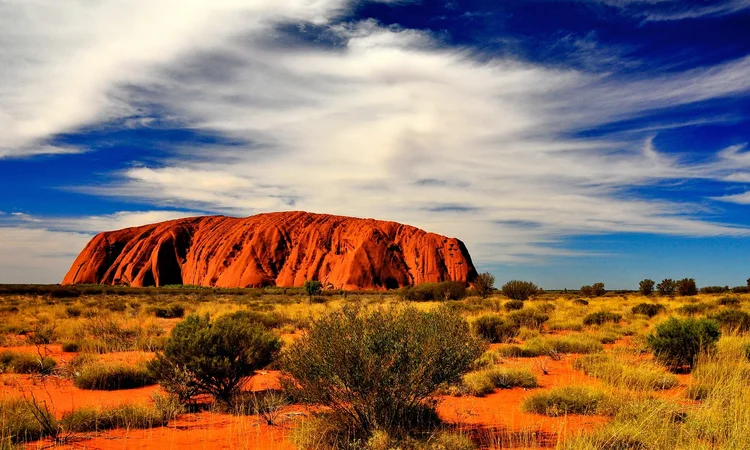
The 348-metre sandstone monolith in the Red Centre is one of the world's most powerful landscapes — and one that has to be experienced rather than just photographed. It changes colour from orange to red to deep purple as the light shifts. The Anangu people (the traditional owners) ask visitors not to climb the rock — the restriction has been in place since 2019. Instead: the base walk (10.6km around the perimeter), the sunrise and sunset viewing areas, the Mutitjulu Waterhole, and the Field of Light art installation (evening). Uluru is 6 hours drive from Alice Springs, or 45 minutes by small plane — fly. Allow 2 nights minimum.
Melbourne
Australia's culture capital and, by most accounts, its best city for food, coffee, and street art. The CBD's hidden lanes (Hosier Lane for street art, Degraves Street for coffee, Hardware Lane for dinner) reward exploration. The Queen Victoria Market, the National Gallery of Victoria, St Kilda's beach promenade, and the Yarra River precinct are the key landmarks. The Great Ocean Road (225km of dramatic coastline, including the Twelve Apostles rock formations) is a superb 2–3 day drive from Melbourne. Allow 3–4 days for the city and surrounds.
The Whitsundays
74 islands in the heart of the Great Barrier Reef, accessible from Airlie Beach or Hamilton Island. Whitehaven Beach (consistently ranked among the world's best) has 7km of pure white silica sand. The best way to experience the Whitsundays is by sailing charter or catamaran — 2–3 day sailing tours depart from Airlie Beach regularly. Hamilton Island has an airport with direct flights from Sydney and Melbourne.
Australia by Region
🌊 New South Wales (Sydney)
The entry point for most international visitors. Sydney, Blue Mountains, Hunter Valley wine country, Byron Bay (beach-and-surf lifestyle, excellent food scene). Good year-round; summer (Dec–Feb) is hot and busy; spring and autumn are ideal.
🐠 Queensland (Reef & Whitsundays)
Cairns, Port Douglas, the Whitsundays, and the Daintree. Tropical climate — visit April–October (dry season) to avoid the wet season (Nov–March) and marine stingers on the beaches. The Reef is accessible year-round.
🎨 Victoria (Melbourne)
Melbourne, the Great Ocean Road, the Grampians, and the Yarra Valley wine region. Pleasant year-round; Melbourne's weather is notoriously changeable — "four seasons in one day" is a local cliché that's largely true. Avoid the January heat for outdoor activities.
🔴 Northern Territory (Uluru)
Uluru, Kings Canyon, Alice Springs, and Kakadu National Park. Visit April–October (cooler and drier). July and August are the most popular months — book accommodation at the resort near Uluru well in advance.
🦘 Western Australia (Perth)
The most remote state, and increasingly popular. Perth, Fremantle, Margaret River wine region, and the extraordinary Kimberley in the north. A separate trip in its own right — don't try to combine with the east coast without at least 3 weeks.
🐨 South Australia (Adelaide)
Adelaide, Barossa Valley (Australia's most famous wine region), Kangaroo Island (wildlife, including koalas and sea lions in the wild), and the Flinders Ranges. Underrated and genuinely excellent. Good to add to a Melbourne-based itinerary.
Best Time to Visit Australia — Month by Month
Australia is a vast country spanning multiple climate zones, so "best time to visit" depends heavily on where you're going. The tropical north (Queensland, Northern Territory) and the temperate south (Sydney, Melbourne) have almost opposite ideal seasons.
For the east coast (Sydney, Melbourne): September–November and March–May. For the Great Barrier Reef and tropical north: April–October (dry season). For Uluru and the Red Centre: April–September. Avoid northern Queensland December–March (wet season/cyclones) and central Australia December–February (extreme heat, 45°C+).
| Month | Sydney/Melbourne | Reef/Cairns | Uluru | Verdict |
|---|---|---|---|---|
| January | 26°C, summer holidays | 31°C, wet season | 40°C+, extreme heat | Avoid north & centre |
| February | 26°C, humid | 31°C, cyclone risk | 40°C+ | South only |
| March | 24°C, settling | 29°C, wet ending | 36°C, easing | East coast improving |
| April | 22°C, pleasant | 27°C, dry starts | 29°C, ideal | Excellent everywhere |
| May | 19°C, mild | 25°C, perfect | 26°C, perfect | Best overall |
| June | 17°C, cool | 24°C, peak dry | 23°C, cool nights | Reef & Uluru peak |
| July | 16°C, cool | 23°C, dry & clear | 21°C, cold nights | Best for north |
| August | 17°C | 24°C, dry | 24°C | Excellent north |
| September | 20°C, spring | 25°C, dry season | 28°C | Best for east coast |
| October | 22°C, warming | 28°C, transitioning | 33°C, getting hot | East coast ideal |
| November | 24°C, busy | 30°C, wet starting | 37°C, very hot | East coast only |
| December | 25°C, peak season | 31°C, wet season | 40°C+ | School holidays — crowded |
Best Time by Region
🌊 Sydney & New South Wales
Best: September–November, March–May. Sydney's spring and autumn are ideal — warm, clear, and before or after the December–January school holiday surge. Summer (December–February) is hot and busy but beach season is in full swing. Winter (June–August) is mild (16°C) and uncrowded.
🎨 Melbourne & Victoria
Best: October–April. Melbourne's weather is notoriously changeable year-round ("four seasons in one day" is a local cliché that's true). Spring and autumn are the most settled. The Great Ocean Road is accessible year-round but best October–March for warm weather road tripping.
🐠 Great Barrier Reef & Cairns
Best: April–October (dry season). The tropical north has two seasons. Dry season (April–October): sunny, low humidity, excellent visibility for diving and snorkelling, sea temperatures 24–26°C. Wet season (November–March): heavy rain, cyclone risk, box jellyfish in the water, and stinger suits required on beaches.
🔴 Uluru & Red Centre
Best: April–September. The Red Centre is one of the hottest places on earth in summer — 45°C is not unusual in January, and temperatures above 38°C make outdoor activity genuinely dangerous. April–September brings comfortable days (20–28°C) and cold nights. July is the most popular month; book accommodation far in advance.
⛵ Whitsundays
Best: June–August. The Whitsundays sit in the tropics — the dry season brings clear skies, lower humidity, and the best sailing conditions. Whitehaven Beach is accessible year-round but the July–August window is peak for good reason. Avoid January–March (cyclone season).
🦘 Western Australia (Perth)
Best: September–November, March–May. Perth has a Mediterranean climate — hot dry summers (35°C+) and mild wet winters. Spring wildflowers (September–October) in the Wheatbelt region are spectacular. Margaret River wine country is good year-round; the Kimberley is best May–September.
Practical Australia Tips
Visas
Most nationalities need an ETA (Electronic Travel Authority) or eVisitor visa for Australia — both applied for online and approved quickly (often within minutes). US, UK, EU, Canadian, and most Western passport holders qualify. Cost: AUD 0 for the ETA. Check the Australian Department of Home Affairs website for current requirements. We advise on visas as part of all our custom Australia tours.
Internal Flights
Essential. Sydney to Cairns: 3 hours by air, 2 days by road. Book with Qantas, Virgin Australia, or Jetstar. Book early — Australian domestic fares increase sharply as departure approaches. We book all internal flights as part of our custom Australia tours.
Currency & Costs
Australian Dollar (AUD). Australia is not cheap — expect to pay AUD –8 for a coffee, AUD 0–120 for a mid-range dinner for two, AUD 00–400 for a decent hotel room. Budget AUD 50–250/person/day for accommodation, food, and transport. Activities (Reef day trips, Uluru tours) are additional.
Driving
Australians drive on the left. Roads outside cities are excellent. Petrol is more expensive the further you get from major cities. Never drive at dawn or dusk in rural areas — kangaroos cause thousands of serious accidents each year.
Wildlife & Safety
Australian wildlife genuinely is as dangerous as its reputation suggests, but most visitors never encounter anything threatening. Don't swim in crocodile territory (northern Queensland, Northern Territory rivers — signage is clear). Box jellyfish in tropical Queensland waters October–May: swim in stinger suits or only at patrolled beaches. Sharks: don't swim at dusk, dawn, or near fishing activity. Spider caution in Queensland bushland. The country's medical facilities are excellent if something does go wrong.
Plan Your Australia Trip
Our custom Australia tours handle everything — internal flights, accommodation, guided experiences at the Reef and Uluru, and Great Ocean Road driving routes. Tell us your dates and interests and we'll design a personalised Australia itinerary within 48 hours.